The MSMED Act, 2006, promotes the development and competitiveness of micro, small, and medium enterprises (MSME). It includes provisions for handling delayed payments, making buyers liable to pay a compounded fine if they fail to make payment within 45 days from the acceptance of goods/services.
Understanding the MSMED Act, 2006
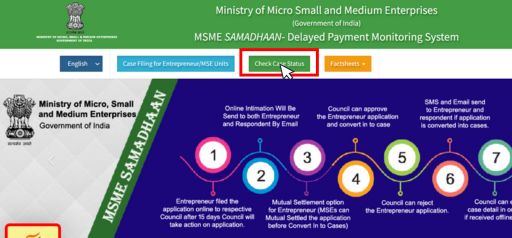
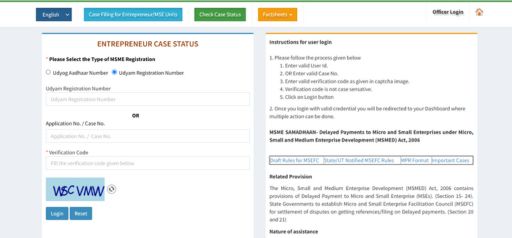
The MSME Samadhaan Portal, launched by the Ministry of Micro, Small, and Medium Enterprises, helps Micro and Small Enterprises (MSEs) file complaints about delayed payments. Once a complaint is filed, it is forwarded to the relevant Micro and Small Enterprise Facilitation Council (MSEFC). These complaints are accessible by Central Ministries, Departments, CPSEs, and State Governments for proactive action, ensuring efficient monitoring and resolution of delayed payments. Udyam Registration (UR) is mandatory for filing applications.
Table of Contents
How is the Samadhaan Portal beneficial for MSMEs?
Financial Stability: Timely payments help MSMEs to manage all their expenses effectively.
Reduced Dependency on working capital: Instant payments can reduce the dependency of MSMEs on working capital loans
Higher credibility: MSMEs can show their dedication to ethical business practices and gain the trust of stakeholders by using MSME Samadhaan for conflict resolution.
Strong business ties: Prompt dispute resolution helps MSMEs and their purchasers build stronger business relationships, which in turn creates an atmosphere that is favorable to long-term partnerships.
Key Provisions of the MSMED Act, 2006
Sections 20 and 21: State Governments must establish MSEFCs for settling disputes on delayed payments. MSEs with valid Udyog Aadhar (UAM) or Udyam Registration can apply.
Section 16: Buyers are liable to pay interest on delayed payments, compounded at three times the RBI bank rate.
Compensation for MSMEs
The State’s MSEFC may direct the buyer to pay the outstanding balance, including interest.
Salient Features of the MSME Samadhaan Portal
Timely Redressal: Every reference to the MSEFC should be resolved within 90 days.
Compound Interest: Buyers must pay interest at three times the RBI bank rate for delays beyond 45 days.
State Government Role: State Governments must notify the authority for filing Entrepreneur Memorandum, MSEFC rules, and the constitution of MSEFCs.
Implementation
Provisions are implemented by the MSEFC, chaired by the Director of Industries of the State/UT. State Governments/UTs must ensure regular MSEFC meetings to decide delayed payment cases within 90 days.
Eligibility Criteria or Who can Apply for MSME Samadhaan?
Any micro or small enterprise with a valid Udyam Registration can apply for MSME Samadhaan. To qualify for MSME Samadhaan, your business must be categorized as an MSME according to the Government of India’s MSME Act, 2006. This category includes micro, small, and medium-sized businesses, as defined by their investment in plant and machinery or equipment as well as their annual turnover.
Any Micro or small enterprise having valid Udyam Registration can applyon the MSME Samadhaan portal.
Q.2 How can I get a Udyam Registration (UR) Number?
Online registration for Udyam can be done by visiting the Udyam portal available on the official website of the Ministry of MSME at the following address:- udyamregistration.gov.in
Q.3 If there is no action on an application filed by MSEs, whom to contact?
Following submission, the application is automatically sent online to the relevant MSEFC. As a result, following online application submission through the MSME Samadhaan Portal, the concerned MSEFC should be contacted. The acknowledgment email delivered to the applicant’s registered email address includes the contact address of the relevant MSEFC.
Q.4 How do you upload multiple invoices?
Several invoices can be combined into one single PDF and can be uploaded. The affidavit of the oral purchase order should also be included in a single PDF.
We use cookies to enhance your browsing experience, serve personalized ads or content, and analyze our traffic. By clicking "Accept All", you consent to our use of cookies.