
What is Pradhan Mantri Awas Yojana?
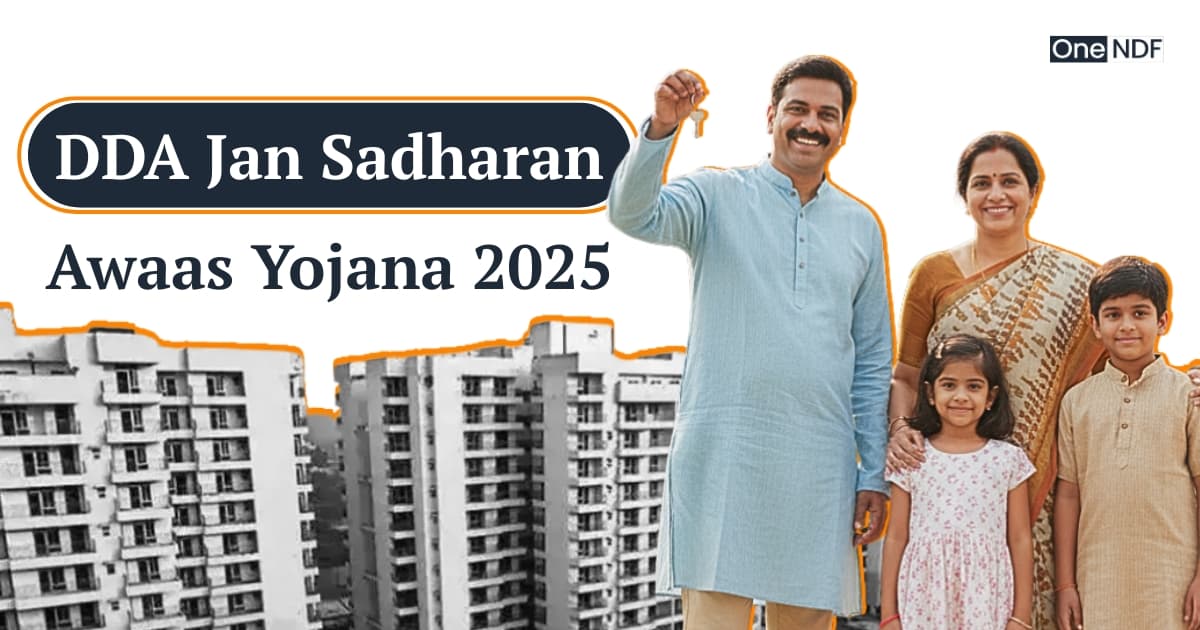
Pradhan Mantri Awas Yojana (PMAY) was launched on 1st June, 2015, by the Government of India and implemented by the Ministry of Housing and Urban Affairs (MoHUA) is a Credit Linked Subsidy Scheme (CLSS). It was launched with the aim to provide housing at an affordable price to the weaker sections of the society, lower income group people, urban poor and rural poor. The Pradhan Mantri Awas Yojana ahs two components:
- Pradhan Mantri Awas Yojana Urban (PMAY-U)
- Pradhan Mantri Awas Yojana Gramin (PMAY-G)
Highlights of PMAY Scheme
- Subsidised Interest Rate: It offers interest rate as low as 6.50% p.a. On housing loans for 20 years.
- Focus on Special Groups: Differently-abled and senior citizens receive preferential ground floor allocations.
- Eco-Friendly Construction: Sustainable and environmentally conscious technologies utilised in building.
- Pan-India Coverage: The scheme spans 4041 statutory towns with initial priority given to 500 Class I in 3 phases.
- Early Credit-Linked Subsidy: Implementation of the credit-linked subsidy begins at the project’s inception, covering all statutory towns in India.
Aim of the Scheme
The Government of India launched the Pradhan Mantri Awas Yojana with an aim to promote and encourage sustainable and affordable housing to the lower income group.

Beneficiaries under Pradhan Mantri Awas Yojana
The following beneficiaries in both Urban and Gramin are as follows:
Beneficiaries under PMAY- Urban
- Labour, urban poor (rickshaw pullers, street vendors, other service providers, etc), industrial workers and migrants belonging to EWS/LIG segments
- Scheduled Castes/Scheduled Tribes/Other Backward Classes, widows and minorities belonging to EWS/LIG segments
Beneficiaries under PMAY- Gramin
- Scheduled Tribes/Scheduled Caste
- Household without shelter
- Destitute/ living on alms
- Manual scavengers
- Primitive tribal groups
- Legally released bonded labourer
Income Range for Economic Groups under PMAY Housing Scheme
The first thing that housing scheme’s applicants need to understand is whether they are eligible for subsidy. The following table divides the various economic groups as per their annual income range for easier assessment.
| Economic Sections | Annual Income Range | Eligible Subsidy (%) |
| Economically Weaker Section (EWS) | Up to Rs. 3 lakh | 6.5 |
| Lower Income Group (LIG) | Between Rs. 3 lakh and Rs. 6 lakh | 6.5 |
| Middle Income Group I (MIG I) | Between Rs. 6 lakh and Rs. 12 lakh | 4 |
| Middle Income Group II (MIG II) | Between Rs. 12 lakh and Rs. 18 lakh | 3 |
Source: pmay-urban.gov.in
Types of PMAY Scheme
The PMAY scheme is not limited to just the bigger cities and towns. Villages, slums and other rural areas also come under the Credit-linked Subsidy Scheme. This includes 2 types of PMAY scheme based on the area where they focus on:
Pradhan Mantri Awas Yojana Gramin (PMAY- G)
| Aspects | Details |
| Date of Establishment | 2016 |
| Objective | To provide housing for the rural poor, promote affordable housing. |
| Target Beneficiaries | Economically Weaker Section (EWS) in rural areas |
| Type of Assistance | Financial Assistance for construction of houses |
| Financial Aid | Rs. 1.20 lakh per house in plain areas and Rs. 1.30 lakh in hilly areas. |
| Eligibility Criteria | 1. Must belong to Below Poverty Line (BPL) 2. Must not own a pucca house |
| Implementation | Through the Ministry of Rural Developments and State Governments |
| Key Features | 1. Use of local materials 2. Community participation 3. Focus on women’s ownership |
| Verification Process | Beneficiaries are verified through the Socio-Economic Caste Census (SECC) 2011 data. |
Pradhan Mantri Awas Yojana Urban (PMAY- U)
| Aspects | Details |
| Date of Establishment | 2015 |
| Objective | To provide affordable housing to the urban poor and promote housing for all. |
| Target Beneficiaries | Economically Weaker Sections (EWS), Low-Income Groups (LIG) and Middle Income Groups (MIG) |
| Types of Assistance | 1. Subsidy on Home Loans 2. Financial assistance for construction or enhancement of houses. |
| Interest Subsidy | Up to 6.5% on home loans for EWS and LIG categories |
| Eligible Income Limits | 1. EWS: Up to ₹3 lakh 2. LIG: ₹3 lakh to ₹6 lakh 3. MIG I: ₹6 lakh to ₹12 lakh 4. MIG II: ₹12 lakh to ₹18 lakh |
| Implementation | Through Urban Local bodies (ULBs) and State Governments |
| Components | 1. Affordable Housing in Partnership 2. Beneficiary Led Construction |
| Key Features | 1. Smart City Integration 2. Eco-Friendly construction practices 3. Gender- sensitive approach |
Benefits of Pradhan Mantri Awas Yojana
- Your own house: Beneficiaries will get a own house of a minimum size of 25 square metre under PMAY- G. The beneficiaries under the PMAY- U will get a house of 30 square metre to 200 square metre carpet area depending on their category.
- Financial Assistance: The beneficiaries under the PMAY- G will receive an assistance of Rs 12,000 for the construction of a toilet from the Swachh Bharat Mission. They will also receive a unit assistance of Rs. 1.20 lakh in plains and Rs. 1.30 lakh in Hilly/ Difficult Areas. The beneficiaries under the PMAY- U will get a Central Assistance of Rs 1.5 lakh per EWS house.
- Land Ownership: The government will provide government land or any other land (public land) for landless persons to construct houses under PMAY.
- Women Empowerment: The houses will be allotted in the name of the woman member or jointly in the name of the husband and wife of the household. This leads to empowering women of the country.
- Interest Subsidy: Beneficiaries of PMAY will get interest subsidy on housing loan for purchase or new construction of houses from the Primary Lending Institutions (PLIs).
- Improvement in Socio-economic status: The houses provided to homeless families will improve their socio-economic status and quality of life.
- Less slum areas: The PMAY- U will help to reduce slums in towns and cities by providing the slum dwellers a pucca house. This will help to bring slum dwellers into the formal urban settlement.
- Direct Transfer: The financial assistance under the scheme is directly transferred to the beneficiaries electronically to their bank accounts linked to Aadhaar. Thus, it reduces the chances of fraud and ensures that the beneficiaries receive funds.
Also Read: 6 Benefits for Women Borrowers taking Home loan in India
PMAY Subsidy Calculator
PMAY calculator is a home loan subsidy calculator through which you can evaluate the maximum home loan subsidy you can get under the PMAY scheme. It is also known as “PMAY Subsidy Calculator”, it is a self-help tool that works on the PMAY subsidy calculation formula. It requires you to enter your actual household income, home loan amount and home loan tenure.
Eligibility Criteria for Pradhan Mantri Awas Yojana
To avail the benefits and subsidies of PMAY, an individual must fall under the following criteria:
- The family’s income must not exceed Rs. 18 lakh in the preceding financial year.
- Either the woman should be the owner or the joint owner of the house on the property papers or deed. This rule is not only applicable in the case where there is no female member in the family.
- Benefits will be available to individuals only on the “New Property Purchase” and not an existing one. Also, only 1 “Pucca House” can be claimed in the name of one individual.
- The beneficiaries must not have availed any central assistance or benefits from any other housing scheme beforehand, from either the state or central government for the scheme to apply.
- As per the Census 2011, the property must fall in the area covered under the Pradhan Mantri Awas Yojana scheme.
- Beneficiaries must not have availed benefits under PMAY or any other credit-linked subsidy scheme from any of the financial institutions beforehand.
Documents required for PMAY Registration
The documents required for PMAY registration depends on whether the beneficiary is a salaried or a self-employed individual.
For Salaried Applicants:
- Application Form (filled and downloaded from official website)
- Proof of Identity: PAN Card is mandatory. Moreover, individuals need to provide additional identity proof, which includes Aadhaar Card, Voter ID Card, Driving License, Passport, etc.
- Proof of Address: Documents which include Passport, Voter ID Card, Electricity Bill, Rent agreement, residence address proof, etc.
- Proof of Income: 6 months bank statement, last 2 months salary slip or latest Form 16
- Property Documents: Agreement to sell, a chain of property documents, the allotment letter, etc.
For Self-Employed Applicants:
Apart from the above mentioned documents, self-employed applicants must provide additional, regarding their business.
- Address Proof for Businesses: One of the important documents, which includes trade licence certificate, SEBI Registration Certificate, Shops and Establishment Certificate, PAN Card or VAT registration certificate, Memorandum of Association, Partnership Deed, etc.
- Income Proof: It can include ITR for the preceding two years, Profit & Loss and Balance Sheet info, etc.
How to apply for the PMAY scheme?
Steps to apply for PMAY- U
- Step 1: Go to the PMAY website.
- Step 2: Click on ‘Sign In’ option and click on ‘New User? Register Here’.
- Step 3: Enter Aadhaar details to proceed
- Step 4: After filing in the Aadhaar details, you will be redirected to the application form stage where you will have to fill in the details accurately.
- Step 5: Once this is done, click on ‘Save’ and enter the Captcha mode.
- Step 6: Next, click on ‘Save’. The application is complete now and a print out can be taken at this stage.
Steps to apply for PMAY- G
Eligible beneficiaries can visit the respective Gram Panchayat, Sabha or lowest unit of local self-government recognised by the respective State/ UT Panchayat Act and submit their details to the officials for enrolling to the PMAY- G.
How to Check PMAY Status
To check the Pradhan Mantri Awas Yojana application status just sign in to the official portal of PMAY. Navigate to the track application option. Next, follow the prompted directions shown on the portal and the status will be displayed.
Also Read: Pradhan Mantri Awas Yojana in Mumbai
Top banks offering home loans Under PMAY Scheme
Top Banks in India which offer loans under the PMAY scheme are listed below:
- State Bank of India
- PNB Housing Finance
- HDFC Bank
- LIC Housing Finance
- Bank of Baroda
- ICICI Bank
- Axis Bank
- Kotak Mahindra Bank
- Union Bank of India
- Aditya Birla Home Loan
- Shinhan Bank
For more information click here Best Banks for Home Loans in India
PMAY Customer Care Helpline Numbers
For queries related to PMAY, one can use the following toll-free helpline number to get the solutions:
- 1800-11-6163 (Urban, HUDCO)
- 1800-11-6446 (Gramin)
- 1800-11-3388 (Urban, NHB)
- 1800-11-3377 (Urban, NHB)
Tax Benefits under PMAY Scheme
Tax Benefits one can claim under the following sections of the Income Tax Act 1961, are as follows:
- Section 80C: Under Section 80C Deductions of up to Rs 1.50 Lakh per year on the home loan principal repayment.
- Section 24(b): Deductions of up to Rs 2 Lakh per year on home loan interest payment.
- Section 80EE: Under Section 80EE, first-time homebuyers can avail yearly tax relief of up to Rs 50,000.
- Section 80EEA: Deductions of up to Rs 1.50 Lakh per year on home loan interest payment in case your property comes under the affordable housing category.
Also Read: Home Loan Tax Benefits
How does OneNDF benefit you?
OneNDF supports beneficiaries of the Pradhan Mantri Awas Yojana by offering affordable home loans with low interest rates. OneNDF facilitates access to government subsidies, significantly reducing housing costs. Moreover, they provide financial literacy programs to educate beneficiaries on managing loans. By helping you to compare the best loan options across different banks/NBFCs, streamlining the application process and offering tailored financial products, these institutions enhance accessibility and support you throughout the home-buying journey.
FAQs
1. What is the maximum tenure for the PMAY scheme?
The PMAY scheme comes with a maximum tenure of 20 years.
2. How to register for the PMAY scheme?
To register for the Pradhan Mantri Awas Yojana, you can:
- Go to the PMAY website
- Select Citizen Assessment or Apply Online
- Choose your category based on your income group
- Fill in the personal information, income details, Aadhaar Number and property information
- Submit your application online
3. Who is eligible for the PMAY Scheme?
Individuals from the Economically Weaker Section (EWS), Low Income Groups (LIG) and Middle Income Groups (MIG) are eligible. Annual income should not exceed Rs 18 Lakhs.
4. How much time does it take to get the subsidy amount for PMAY?
It usually takes around 3 to 4 months for the subsidy amount from PMAY to be credited to the beneficiary. This is subject to the verification process of the government.
5. If I am a woman can I apply for this scheme?
Yes, this scheme gives priority to women who are running a family within the lower income groups. However, if your husband, father or any other family member that you reside with has applied, your application will be rejected.
6. What is TDR or Transfer of Development Rights?
This term simply ensures the availability of a particular amount that is additional on the built up with respect to the surrendered area of land which allows the owner to use an added built-up area for himself/herself in some other land.
7. Do I have to pay for the PMAY registration?
Yes, you only have to pay an application fee of Rs 25 plus service tax at the Common Services Centres. However, there are no charges levied if you are applying online.