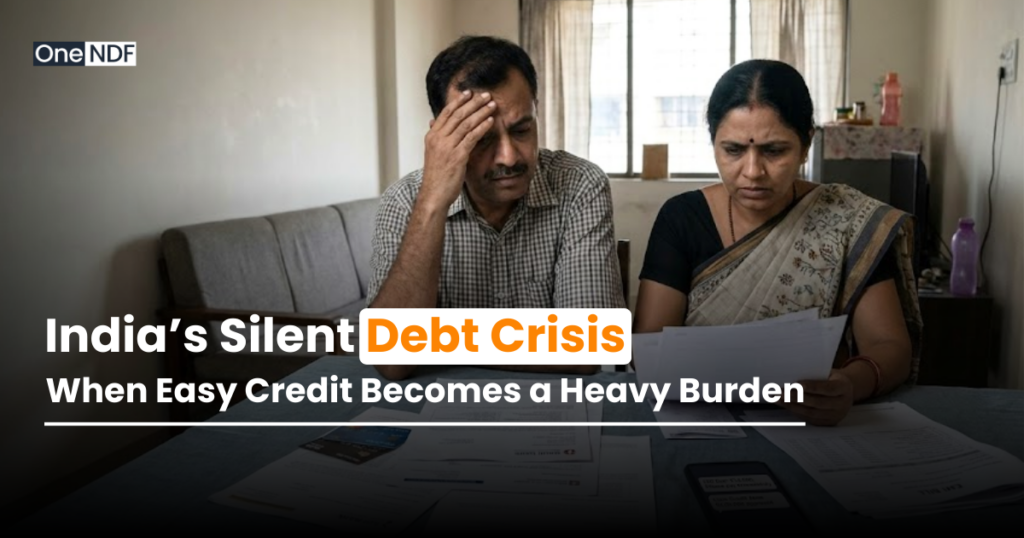


India is seeing a sharp rise in repayment stress among borrowers. A significant share of individuals now spend more than 40% of their monthly income on loan EMIs — a level that leaves little room for savings, emergencies, or financial resilience.
This trend is no longer confined to a single income group. Salaried professionals, self-employed individuals, and small business owners are all increasingly exposed. Easy access to personal loans, short-tenure digital credit, and deferred payment products has expanded borrowing, but often without adequate checks on long-term affordability.
The Shift From Credit Use to Credit Dependence
Borrowing today is less about planned consumption or growth and more about managing cash flow gaps. Many borrowers hold multiple loans simultaneously — personal loans, app-based credit, BNPL instalments — with new debt often taken to service older obligations.
Individually, these loans may appear manageable. Collectively, they can push EMI burdens beyond sustainable limits. Over time, this creates a fragile financial structure where even small income disruptions lead to stress.
Where the System Falls Short
The current lending environment tends to emphasise speed and access, but offers limited support on affordability planning.
Three structural gaps stand out:
- Affordability is assessed in silos, not across total obligations
- Repayment impact is rarely explained upfront, beyond the monthly EMI figure
- Post-disbursal guidance is missing, leaving borrowers to navigate rising debt on their own
As a result, borrowers often recognise the strain only after EMIs start consuming a disproportionate share of income.
Why This Is More Than an Individual Issue
It is easy to frame repayment stress as poor financial discipline. In reality, the system enables borrowing without providing borrowers a consolidated view of their financial exposure.
Without clarity on total liabilities and realistic repayment capacity, even well-intentioned borrowers can drift into over-leverage. The issue is less about intent — and more about visibility.
The Case for Better Credit Decision Frameworks
Addressing repayment stress requires shifting how borrowing decisions are made. Greater emphasis is needed on:
- Understanding total debt obligations
- Matching loan structures to cash flows
- Evaluating long-term impact, not just short-term access
Digital credit platforms that focus on pre-borrower assessment, structured eligibility checks, and lender matching can help bring this visibility into the process.
OneNDF operates in this space by helping borrowers understand their credit position and explore suitable lending options before committing to additional debt — reducing the likelihood of borrowing beyond sustainable limits.
Looking Ahead
India’s credit ecosystem has expanded rapidly. The next phase must focus on balance — ensuring that access to credit is matched with affordability and informed decision-making.
As repayment stress rises, the conversation needs to move beyond loan availability to loan suitability. Borrowing works best when it is planned, transparent, and aligned with real income capacity.
That shift may be critical in preventing today’s EMI stress from becoming tomorrow’s financial crisis.