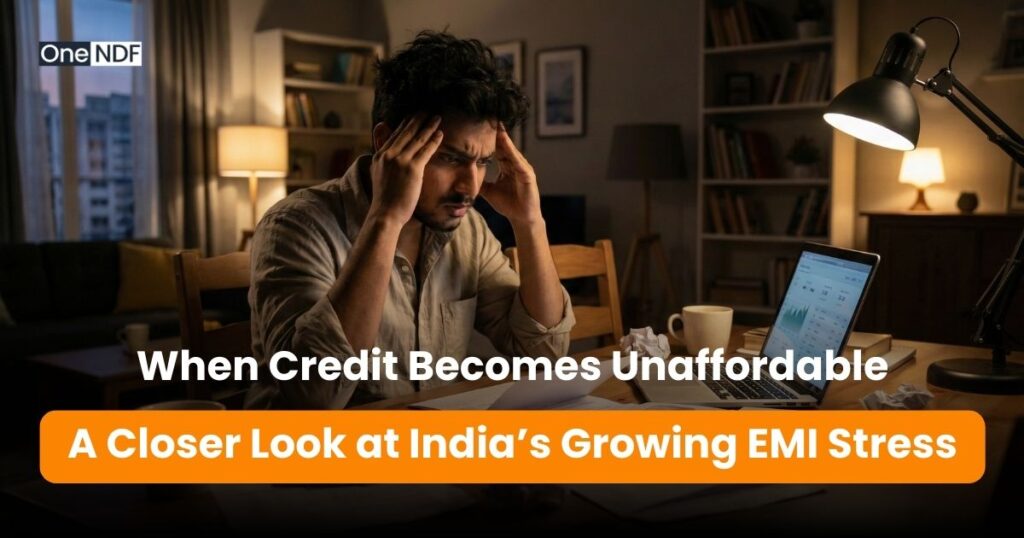

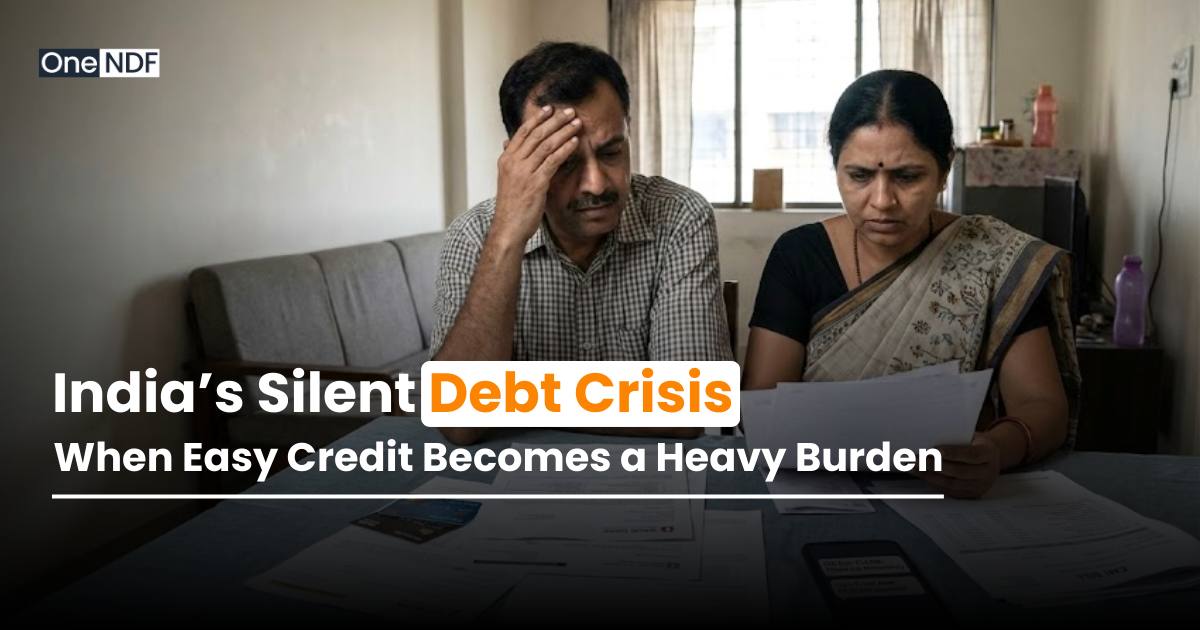
For many Indian households, the beginning of the month no longer signals financial stability. Soon after salaries are credited, a large portion of income is absorbed by EMIs, credit card dues, and short-term loan repayments. What remains is often insufficient to comfortably manage everyday expenses such as food, rent, transport, education, and healthcare.
This pattern reflects a quietly deepening debt problem across the country. What once started as occasional borrowing to manage emergencies has, for many families, turned into a permanent financial strain. Easy access to credit has blurred the line between short-term support and long-term dependence.
EMIs Consuming Household Incomes
A growing number of borrowers are now spending more than 40% of their monthly income on debt repayments. In several cases, nearly half of a household’s earnings are committed to EMIs before essential expenses are accounted for. This is especially evident among lower and middle-income groups, where monthly obligations often leave little room for savings or unexpected costs.
Digital loans, instant credit products, and buy-now-pay-later options were designed for convenience. However, their widespread use—often without a full understanding of long-term costs—has shifted borrowing from a financial tool to a financial necessity.
The Debt Trap Effect
Once debt commitments become unmanageable, households tend to rely on short-term fixes that deepen the problem. Many rotate credit card balances, borrow informally from friends or family, or take new loans to service existing ones. While these measures provide temporary relief, they increase interest costs and reduce future financial flexibility.
Over time, this cycle makes it increasingly difficult for borrowers to regain control over their finances.
Cutting Essentials to Stay Afloat
To keep up with repayments, families are often forced to sacrifice essentials. Medical treatments are delayed, education expenses are reduced, insurance policies are discontinued, and household budgets are cut to the bare minimum. Some borrowers resort to salary advances or liquidate long-term assets such as gold or investments, weakening their financial safety net.
These decisions may help in the short run but leave households exposed to even minor economic shocks.
The Human Cost of Persistent Debt
Beyond financial stress, prolonged indebtedness takes a psychological toll. Constant repayment pressure, reminders, and collection calls contribute to anxiety, poor sleep, and reduced work productivity. Financial insecurity increasingly affects overall well-being, even when defaults have not yet occurred.
This makes the crisis particularly dangerous—it remains largely invisible until the damage is already done.
Why Better Credit Decisions Matter
India’s challenge is not access to credit, but the quality and structure of credit. Borrowers often take the first available loan without visibility into alternatives that may be more suitable for their income and repayment capacity.
This is where neutral credit-guidance platforms—such as OneNDF—play a constructive role by helping borrowers view and evaluate multiple structured loan options across lenders, encouraging decisions based on affordability rather than urgency.
A Shift Toward Sustainable Borrowing
Solving India’s silent debt crisis will require more than regulatory oversight or reduced lending. It calls for better transparency, improved financial literacy, and borrowing decisions aligned with long-term sustainability.
Credit, when structured responsibly, can be a stabilising force. When taken without clarity, it becomes a burden. The difference lies not in how easily loans are available, but in how wisely they are chosen.