
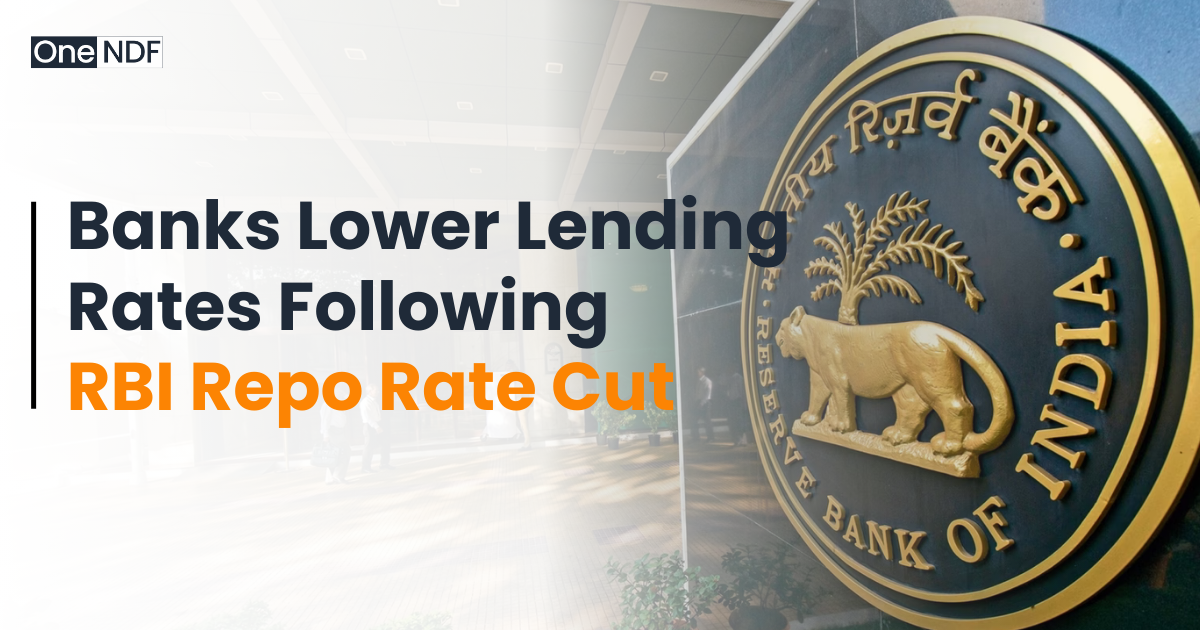
Several major Indian banks have announced reductions in lending rates after the Reserve Bank of India (RBI) cut the policy repo rate, reinforcing efforts to improve credit flow and ease borrowing costs across the economy. Public sector lenders such as State Bank of India (SBI), Punjab National Bank (PNB), Canara Bank and Indian Overseas Bank (IOB) have adjusted their repo-linked and external benchmark-linked lending rates across select loan categories.
The move is expected to benefit borrowers with loans linked to external benchmarks, including home loans and MSME credit, by lowering effective interest costs and monthly repayments.
Understanding Rate Transmission
Repo rate changes are intended to transmit quickly to lending rates, particularly for loans linked to external benchmarks. However, the impact on individual borrowers can vary depending on:
- The benchmark linked to the loan
- Reset frequency
- Credit profile and risk category
- Existing loan terms
As a result, borrowers often need to actively review their loan structures to understand how policy changes translate into actual savings.
Implications for MSMEs and Small Businesses
For MSMEs, changes in lending rates—however incremental—can materially affect cash flows, working capital cycles and growth planning. While banks are increasingly aligning loans to transparent benchmarks, navigating eligibility norms, documentation and lender-specific policies remains complex, particularly for smaller enterprises.
Digital Credit Enablement in a Changing Rate Environment
As India’s credit system becomes more benchmark-driven and data-led, digital platforms are playing a growing role in enabling clearer borrower–lender engagement. OneNDF operates as a digital credit enablement platform that connects borrower financial data with lending institutions, helping businesses better understand their credit position and available financing options.
By working across a broad network of lenders and integrating with key financial systems, platforms such as OneNDF help bring structure, visibility and comparability to the borrowing process—especially during periods of policy rate movement.
A More Transparent Credit Ecosystem
The recent lending rate cuts reflect a broader shift towards greater transparency and standardisation in credit pricing. As monetary policy continues to evolve in response to economic conditions, the ability of borrowers to interpret and act on these changes will be as important as the rate cuts themselves.
Conclusion
The RBI’s repo rate reduction and subsequent lending rate cuts by major banks offer meaningful relief to borrowers. To fully benefit from these changes, borrowers—particularly MSMEs—need access to clear information, eligibility clarity and lender comparability. Neutral, technology-driven platforms like OneNDF contribute to this ecosystem by simplifying how borrowers engage with credit, without replacing the role of banks or financial institutions.