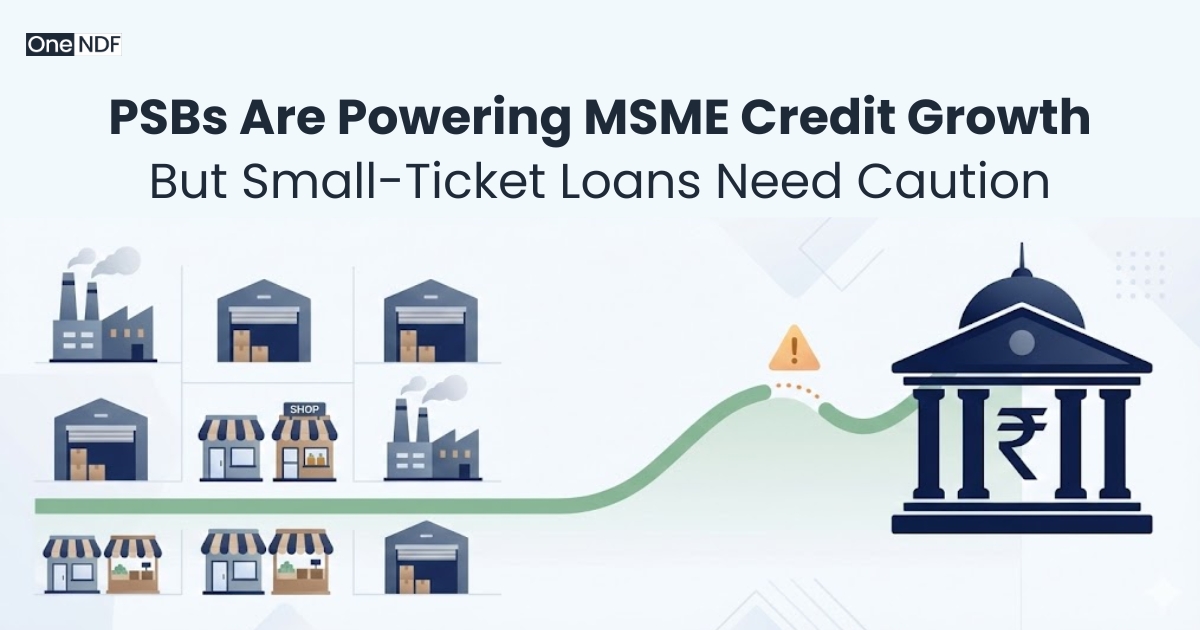
India’s MSME credit landscape is seeing a clear shift. Public Sector Banks (PSBs) have emerged as the primary drivers of new MSME lending, significantly increasing the flow of formal credit to small businesses. While this expansion is a positive development for the sector, early signs of stress are beginning to appear in small-ticket, unsecured loans — calling for more thoughtful credit structuring.
MSME Lending Picks Up Pace
Over the past year, MSMEs have accounted for a much larger share of incremental bank credit than before. A growing portion of new loans is now being channelled to micro and small enterprises, reflecting stronger policy focus, improved bank balance sheets, and renewed confidence among lenders.
PSBs, in particular, have led this growth. Their increased participation has helped widen access to credit for businesses that traditionally struggled to secure bank financing — especially in manufacturing, trading, and services.
Why PSBs Are Leading MSME Lending
Several factors explain the surge in MSME lending by public sector banks:
- Priority sector lending push, with MSMEs remaining a core focus
- Improved risk appetite after years of balance-sheet clean-up
- Greater comfort with secured and semi-secured structures
- Policy and regulatory support encouraging credit flow to productive sectors
This has resulted in higher disbursements, competitive pricing, and longer tenures for eligible borrowers.
Emerging Stress in Small, Unsecured Loans
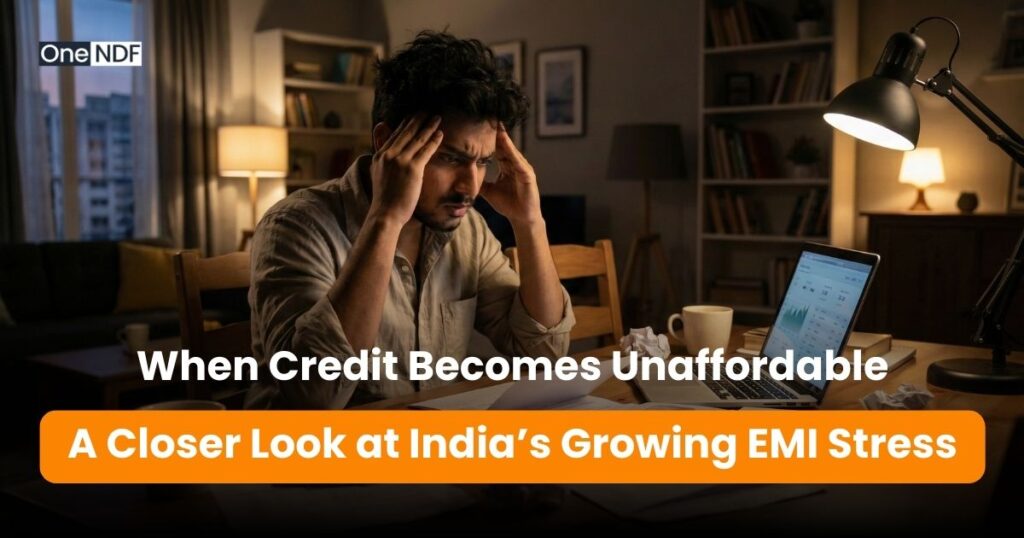
While overall MSME asset quality remains stable, early stress is becoming visible in small-ticket, unsecured loans — typically extended to micro businesses with limited financial buffers.
These loans, though essential for inclusion, are more sensitive to:
- Cash-flow disruptions
- Input cost volatility
- Delays in receivables
- Over-leveraging across multiple lenders
This highlights the need for lenders and borrowers alike to move beyond speed-driven lending and focus on sustainability.
What This Means for MSMEs
For MSMEs, improved access to bank credit is encouraging — but borrowing decisions must remain aligned with cash-flow realities. Structured financing, appropriate ticket sizes, and periodic loan reviews are becoming increasingly important to avoid future stress.
The OneNDF Perspective
At OneNDF, we see this phase as an opportunity to bridge intent with intelligent structuring. Credit growth works best when:
- Loan structures are matched to business cycles
- Borrowers are guided toward the right lender and product
- Risk is balanced, not avoided
As MSME lending continues to expand in 2026, the focus must shift from how fast credit is given to how well it is aligned.
Because sustainable credit isn’t just about access — it’s about outcomes.