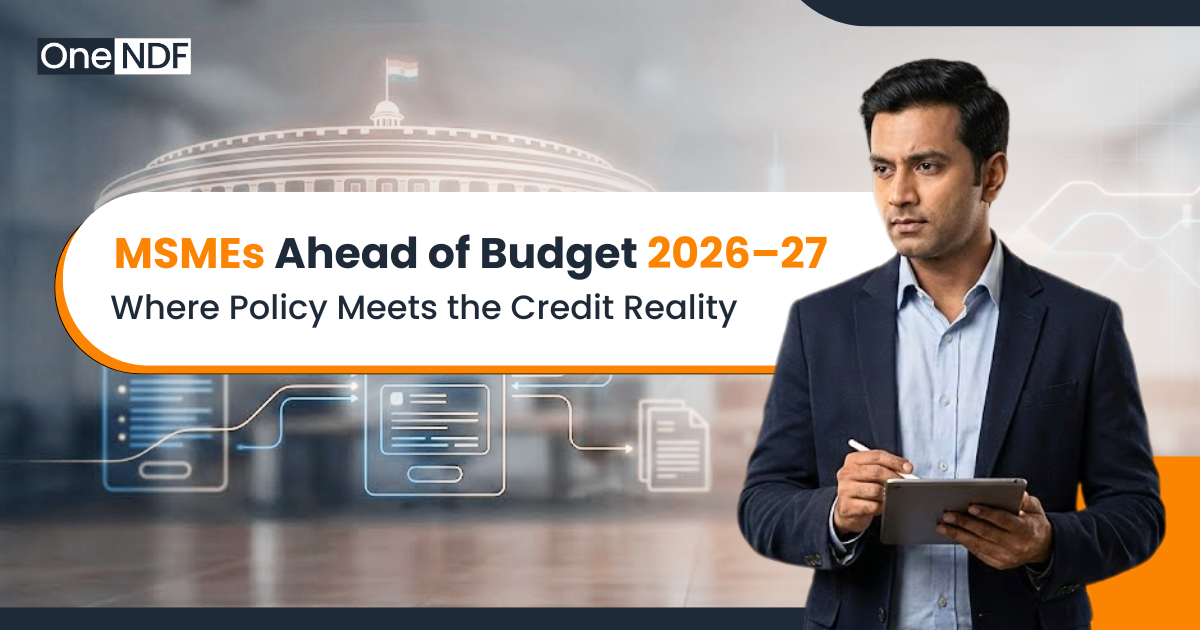
As India heads into the Union Budget 2026–27, MSMEs have placed a familiar yet urgent set of demands on the table — easier credit, lower compliance burden, and protection from external shocks. While these demands reflect long-standing structural gaps, they also point to a deeper issue: the mismatch between policy intent and on-ground access to finance.
MSMEs may be the backbone of the Indian economy, but for many entrepreneurs, growth is still dictated less by opportunity and more by liquidity timing.
The Core Pain Point: Access, Not Intent
Among the key pre-Budget demands is collateral-free credit of up to ₹1 crore at affordable rates, especially for micro enterprises. The ask is simple — predictable working capital without excessive paperwork or delays.
In reality, however, MSME financing today is fragmented:
- Banks prefer larger, well-documented borrowers
- NBFCs price risk higher for smaller units
- Fintech lenders solve speed, but often at higher cost
The result? Business owners spend more time searching for the right loan than using it productively.
This is where the credit conversation needs to shift — from availability to fit.
Why Budget Support Alone Isn’t Enough
Policy measures such as credit guarantees, interest subvention, and export risk funds are necessary. But they work best when the borrower can:
- Identify the right lending product
- Match loan tenure with cash-flow cycles
- Avoid over-borrowing or short-term fixes for long-term needs
Without this alignment, even well-intentioned schemes fail to deliver full impact.
The Missing Layer: Intelligent Credit Matching
This is the gap platforms like OneNDF are designed to bridge.
Instead of pushing a single product, OneNDF works as a loan matchmaker — helping MSMEs navigate banks, NBFCs and specialised lenders to find financing that actually aligns with:
- Business size and stage
- Cash-flow patterns
- Industry-specific risks
- Short-term vs long-term capital needs
As Budget 2026–27 discussions highlight the need for affordable, accessible MSME credit, the role of such platforms becomes increasingly critical — not as a substitute for policy, but as its delivery layer.
Beyond Credit: Simplifying the MSME Journey
MSME demands also include:
- Simplified GST compliance
- Faster refunds
- Reduced procedural penalties
These aren’t just regulatory asks — they directly impact cash flow predictability. When inflows are uncertain and compliance consumes bandwidth, financing decisions become reactive rather than strategic.
By helping businesses structure the right loan at the right time, OneNDF enables MSMEs to focus less on firefighting and more on growth — even before policy reforms fully play out.
What Budget 2026–27 Represents
For MSMEs, the upcoming Budget is more than an annual fiscal event. It is an opportunity to:
- Align credit cost with ground realities
- Reduce friction between lenders and borrowers
- Strengthen India’s growth engine from the bottom up
But execution will matter as much as announcements.
As policy frameworks evolve, platforms that translate intent into access will determine how effectively MSMEs benefit on the ground. And in that ecosystem, OneNDF’s role is clear: cut through complexity, match businesses with the right capital, and make finance work the way MSMEs actually operate.