
In today’s credit-dependent society, loans have become an integral part of fulfilling our financial aspirations and managing unexpected expenses. Loans come in handy if you want to buy a dream home, or a new vehicle, expand your business, or simply cover personal expenses.
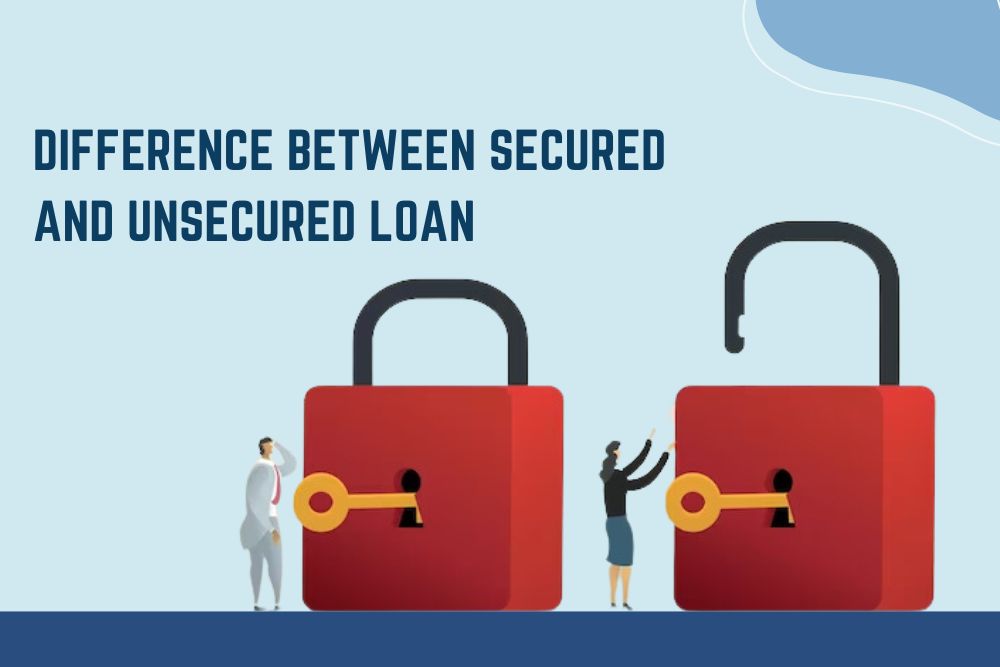
While submitting a loan application, it’s critical to understand the difference between secured and unsecured loans. Loans are broadly classified into these two categories. A secured loan is backed by collateral, such as property or a vehicle, while an unsecured loan does not require any collateral and is based solely on the borrower’s creditworthiness.
In this article, we will explore the contrasting aspects of secured and unsecured loans. By gaining a comprehensive understanding, you will be empowered to make wise choices when traversing the lending landscape in India.
What is a Secured Loan?

A secured loan is a type of loan that is backed by collateral, providing assurance to the lender. The collateral act as security against the loan.
When obtaining a secured loan, the lender places a lien on the asset offered as collateral.
This lien remains in effect until the loan is fully repaid.
There are different types of assets that can be used as collateral for secured loans. The collateral could be property or a vehicle or investments such as mutual funds, stocks, bonds, high-end collectibles, and other things like precious metals or jewellery.
Secured loans provide an opportunity for you to borrow large funds at potentially lower interest rates. But you should also know that secured loans also have some kind of risk associated with them if you fail to repay the loan. Seizing an asset and failing to repay the loan can severely affect your credit score.
Suggested Read: Building a Strong Credit Profile for Business Loan Approval
What is a Unsecured Loan?

An unsecured loan is a type of loan that doesn’t require collateral. Unlike secured loans, unsecured loans are approved primarily on your credibility and credit history.
Due to the absence of collateral, lenders assess your credit score and past repayment history to determine eligibility for unsecured loans. This evaluation helps the lender gauge your ability to repay the loan. Unsecured loans carry higher interest rates as compared to secured loans, although this isn’t always the case.
Unsecured loans include personal loans or student loans. Student loans are used to finance educational expenses.
It is important to note that unsecured loans aren’t backed by collateral and hence carry significant risk for the lender. Therefore, borrowers need to maintain a good credit score and demonstrate a strong repayment history to secure favourable terms and interest rates.
Suggested Read: Understanding Business Loans: A Comprehensive Guide
Difference Between Secured and Unsecured Loans
Let’s see the difference between secured and unsecured loans in the table below:
| Secured Loans | Unsecured Loans | |
| Collateral Requirement | Requires collateral, such as property, vehicles, or assets | Does not require collateral |
| Risk Level | Lower risk for the lender due to collateral | Higher risk for the lender due to lack of collateral |
| Borrowing Limit | Higher borrowing limit based on the value of the collateral | Lower borrowing limit based on creditworthiness |
| Interest Rates | Typically lower interest rates | Generally higher interest rates |
| Eligibility Criteria | May have more lenient eligibility criteria | May have stricter eligibility criteria |
| Repossession Rights | Lenders can seize and sell the collateral in case of default | Lender has limited options for recovering funds in default |
Secured vs Unsecured loan: Which is better?

When it comes to choosing between secured and unsecured loans, the decision depends on your circumstances and requirements. Both types of loans come with their own advantages and disadvantages. Let’s take a closer look at the comparison and help you make an informed decision.
Lock It Down or Go Free
With secured loans, one major advantage is the ease of obtaining the loan. Lenders are more willing to approve secured loans as you attach some kind of collateral and lock it with the lender for a specific period of time. As a result, you enjoy longer repayment periods, lower interest rates and higher borrowing limits.
On the other hand, with unsecured loans, you are free from the anxiety of locked collateral. Unsecured loans are easily accessible to people who don’t have some kind of tangible assets to offer as collateral but have strong credit scores and stable income sources. Although interest rates are higher as compared to secured loans. Unsecured loans especially come in handy for people who need immediate funds but lack collateral.
Curious Case of Secured Loans
Lenders often prefer secured loans because they pose a lesser risk as they are backed by some collateral. Lenders feel more secure knowing they have some recourse if the borrower doesn’t pay back the loan due to the availability of collateral. However, you should carefully consider your financial situation and repayment capability before going for a secured loan. If you happen to default on a secured loan, you could lose your pledged asset.
The Ultimate Decision
The final decision of choosing a secured loan or unsecured loan depends on your financial standing, a specific need and your risk tolerance. Assessing your repayment capacity, comprehending loan conditions and interest rates, and determining your creditworthiness are essential elements in selecting the loan that will best serve your needs.
Suggested Read: Unlock Financial Potential: Lease Rental Discounting Guide
Conclusion
When weighing borrowing options, it’s essential to understand the distinction between secured and unsecured loans. Secured loans require collateral which often results in more favorable terms for borrowers whereas unsecured loans don’t require collateral but rely heavily on the creditworthiness and income stability of the borrower.
Always evaluate your individual financial circumstances, get advice from lenders or financial consultants if necessary, and select the loan that best meets your needs. Responsible borrowing and timely repayments will contribute to building a solid credit history and financial stability in the long run.
To completely understand the ramifications of each loan option and make a decision that best matches your situation, it is essential to speak with financial consultants or lending experts.
Suggested Reads:
- What is SSI? Small-Scale Industries Explained
- 70+ Best RBI Approved Loan Apps In India [2023]
- Fake loan app list: 500+ apps you should avoid at any cost
- 15+ Most Profitable Best Wholesale Business Ideas in India
- GST Certificate Download Made Easy: Your One-Stop Guide 2023
FAQs
Is a home loan secured or unsecured?
A home loan is an example of a secured loan.
What is an example of a secured and unsecured loan?
Personal loans, student loans, etc. are a few examples of unsecured loans. Whereas Housing loans and vehicle loans are examples of secured loans.
Is the gold loan secured or unsecured?
Loans backed by gold have lower interest rates since they are secured loans.
Who gets an unsecured loan?
Unsecured loans do not require any form of collateral. It is given to you by the lender based on your borrowing capacity and creditworthiness.
What is bullet payment?
A bullet payment is a one-time payment paid in full for the balance of a debt, typically upon maturity.