
Understanding Cheque Bounce Charges
A cheque bounce in India can be considered an illegal or criminal offense, and the issuer may be liable to pay charges for this act. Despite the rise of digital payment systems, cheques remain a preferred mode of financial transactions for many businesses. However, cheque bounce incidents have increased significantly in recent years.
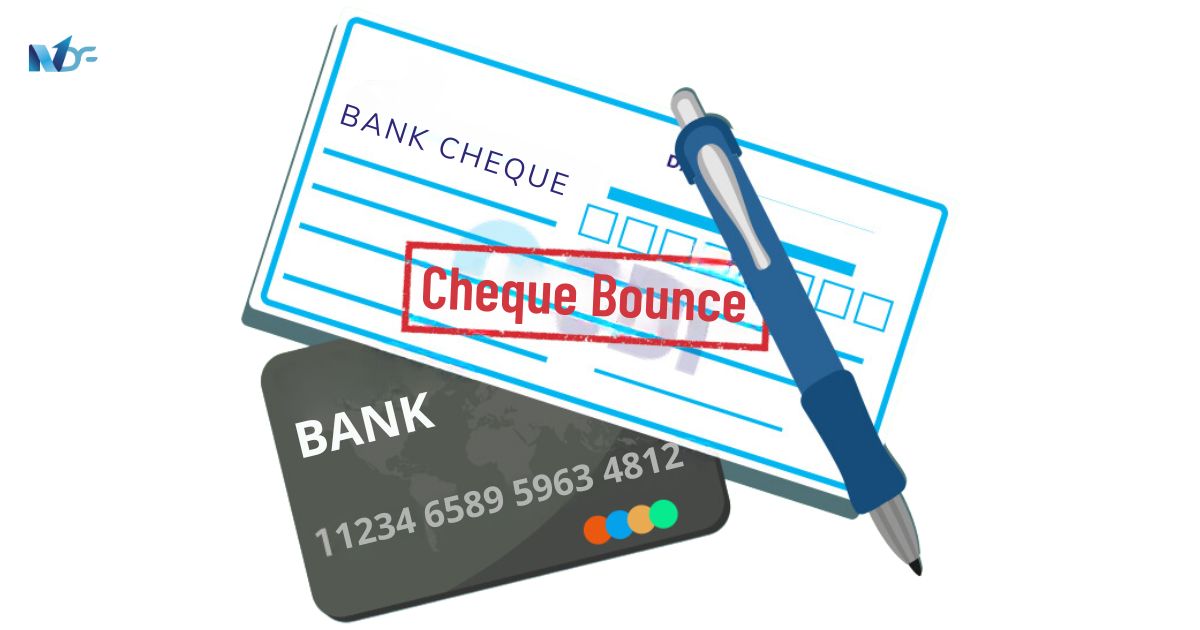
A bounced cheque is one that can’t be processed due to insufficient funds in the account holder’s bank account. A cheque is a written commitment by the payer to the payee for a sum of money. When this cheque is deposited, the funds are ideally transferred from the payer’s account to the payee by the payer’s bank. If this commitment is not honored, the cheque is termed as ‘dishonoured.’
Banks charge a specific fee for cheque bounce incidents. These charges can include a fine of twice the cheque’s amount, 2-year imprisonment, or both, depending on the court’s order.
Reasons for Cheque Bounce
A cheque can be dishonoured for several reasons. Some of these reasons include:
- Mismatch in account numbers
- Signature mismatch or insufficient funds
- Disfigured and damaged cheques
- Expired or incorrectly dated cheques
- Payment stopped by the issuer
“Cheque bounce charges are not just financial penalties; they signify a breach of trust in a transaction, which can have far-reaching consequences for both parties involved. A bounced cheque is more than just a financial misstep; it’s a red flag in the trustworthiness of any transaction. When a cheque bounces, it’s not just money that’s lost, but the credibility of the issuer too.” — CA ShashiKant
Consequences of a Dishonoured Cheque
If a cheque bounces due to insufficient funds, it is a criminal offense under the Negotiable Instruments Act of 1881. Legal action can be taken against the payer, who may be asked to re-issue a cheque within three months. Penalties for bounced cheques vary across banks.
Under Section 138 of the Negotiable Instruments Act, a cheque bounce is a punishable offense with a fine up to twice the cheque’s amount or 2-year imprisonment, or both.
Changes in Cheque Bounce Rule
The RBI mandates maintaining a minimum bank balance to avoid cheque bounces. The National Automated Clearing House (NACH) now operates 24/7, including Sundays, to ensure faster and smoother cheque clearing.
Circumstances of Cheque Bounce
- Inadequate Balance: Insufficient funds in the account
- Expired Validity: Cheque not presented within three months
- Overwriting: Alterations in the cheque details
- Damaged Cheque: Disfigured and unreadable cheques
- Signature Mismatch: Unclear or absent signature
- Inconsistent Amounts: Discrepancy between written and numerical amounts
Remedies Against Cheque Bounce
- Resubmission of Cheque: The payee can ask the drawer to provide another check if the check bounces because of overwriting, a mismatched signature, a mismatch between the amount written on the check and its figures, or damage to the cheque. The payee may file a civil lawsuit against the drawer to recover the cheque amount owed to him rather than having the check bounce if the drawer refuses to give another check.
- Section 138 of the Negotiable Instruments Act: Send a cheque bounce notice demanding payment within 30 days of receiving the bounced cheque notice from the bank.
- Issuance of Cheque Bounce Notice: Provide the drawer a 15-day grace period to pay the cheque amount. Legal action can be initiated if payment is not made within this period.
Issuance of Cheque Bounce Notice:
The first thing to do when a check bounces due to inadequate funds is to demand payment of the amount by sending a written cheque bounce notice by post. Within 30 days of receiving notice from the bank and the bounced cheque, the payee can issue a cheque bounce notice saying that the bank is unable to pay the cheque amount because the amount is insufficient.
Following the issuance of the cheque bounce notice, the payee should grant the drawer a relaxation of 15 days from the receipt of the cheque bounce notice to pay the cheque amount. If the drawer fails to reimburse the cheque amount even after the expiry of 15 days, legal action can be taken by the payee against the drawer within 30 days of the expiry of 15 days.
One must note that a cheque bounce notice cannot be issued if the cheque was issued as a donation, gift, or any other obligation that is not lawfully enforceable.
Filing a Cheque Bounce Suit
A complaint can be filed before the Magistrate in the following locations:
- Where the cheque was drawn
- Where the cheque was submitted for payment
- Where the payment was to be made
- Where the cheque was dishonoured
- Where the demand notice was served
If the suit is in a metropolitan city, it should be filed before the Metropolitan Magistrate. In other cities, it should be filed before the Judicial Magistrate.
Also Read: What is a Cancelled Cheque & How to write a Cancelled Cheque?
How to File a Complaint in Case of Cheque Bounce
- File a complaint before the Magistrate after the 15-day grace period post-notice.
- The complainant appears before the court to furnish case details.
- If convinced, the Magistrate issues a summons to the drawer.
- The drawer appears in court to accept or reject the complaint.
- If the drawer rejects, the court proceeds with a criminal trial.
- Evidence and arguments are presented from both sides.
- If guilty, the court orders a conviction judgment against the drawer.
A civil suit can also be filed to recover the cheque amount but does not result in criminal punishment for the drawer.
Frequently Asked Questions
How much is the cheque bounce penalty charge?
Charges vary from bank to bank, ranging from Rs 50 to Rs 750.
Can you file an FIR for a cheque bounce?
Yes, an FIR can be filed under Section 420 or 406 of the IPC.
Is cheque bounce counted as a crime?
Yes, if it bounces due to inadequate funds, it is a criminal offense.
Can someone be arrested in case of a cheque bounce?
Yes, it is possible to be arrested if a cheque bounces due to insufficient funds.
How much is the bail amount in the case of a bounced cheque?
In the case of a cheque bounce, the bail amount varies from case to case. Bail amounts vary based on the cheque amount, pending cases, and the drawer’s financial status.