
One of the most important functionaries in the debt-financing ecosystem in India are Credit Bureaus. Their domain of work serves as an indispensable element for the services Banks or NBFCs provide to their customers- Determine the creditworthiness of the borrower.
Let us understand what credit bureaus are, how they function, and go through the list of top bureaus in India.
What are Credit Bureaus?
Credit Bureaus are companies that collate and analyse credit information about a borrower and prepare a report to help banks determine whether a borrower is creditworthy or not. A report provided by these bureaus is used by lenders to determine the eligibility of a borrower for various types of loans, including but not limited to business loans, personal loans, overdraft facilities, home loans, and loans against property.
A Credit Bureau is registered under The Credit Information Companies (Regulation) Act, 2005, commonly called the CIC Act and is allowed by the Reserve Bank of India (RBI) to issue Credit Reports. The Credit Report provided by these companies contains a Credit Score that helps Financial Institutions decide the credit exposure to that particular borrower.
How do Credit Bureaus work?

A Credit Bureau acts as a service provider and aggregates the credit-related information of the borrowers from the banking system, including their credit history, previous loans taken, repayment history, debt-related association with other financial institutions, etc.
The data is then synthesised to assign a credit score to the company/individual and is provided to Banks and other financial institutions to help them make informed credit decisions and reduce their risk exposure by avoiding risky customers.
Bureaus respond to credit inquiries by lenders or consumers by providing credit reports, also called a Credit Information Report.
Some also offer services like fraud detection, consultation services to lenders for a judicious credit mix, risk management, data validation, or data authentication.
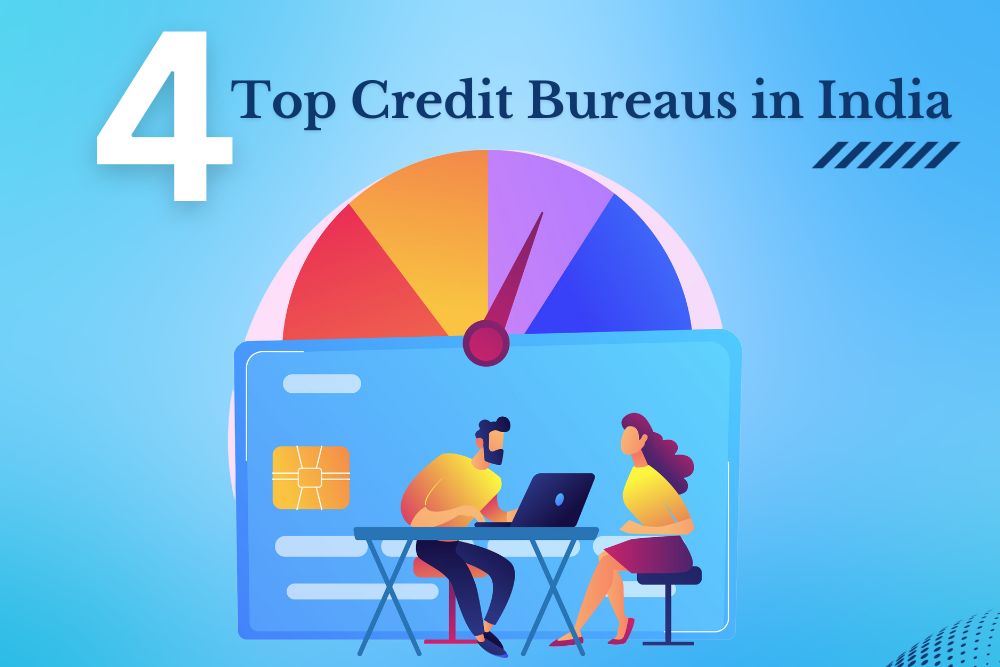
4 Top Credit Bureaus in India
There are currently four Credit Bureaus functioning in India as Credit Information Companies as per the RBI’s guidelines-
1. TransUnion CIBIL

CIBIL, or The Credit Information Bureau Limited was the first credit bureau in India that started functioning as a Credit Information Company in the year 2000.
In 2004, CIBIL commenced its Consumer Bureau operations and in 2006, Commercial Bureau operations for commercial enterprises.
In 2017, TransUnion acquired a stake of 92.1% and the new entity, rechristened as TransUnion CIBIL established its dominance in the industry.
It is the most popular credit bureau in India and the credit score it provides to its customers is known as the CIBIL score.
It also provides a Credit Information Report, also known as a CIR. The CIBIL scores can range from a value of 300 to 900.
Also Read: Building a Strong Credit Profile for Business Loan Approval
2. Experian

Experian is among the reputed global companies for Credit Reporting. It started its operations in India in 2006 and was the first Financial Institution to receive a license to function within the ambit of the New Credit Information Companies (Regulation) Act, 2005, also known as CICRA.
It provides credit reports for free to consumers and the credit scores provided by Experian range from 300 to 850.
3. Equifax

Equifax is an American Company providing credit reports that was given a license to operate in India in 2010.
It provides a comprehensive credit report to lenders so they could optimise their risk exposure and choose creditworthy borrowers to maintain healthy financials. Further, it provides fraud management and credit risk services for businesses. The Equifax Credit Scores can range from 300 to 850.
4. CRIF High Mark

CRIF High Mark touts itself as the first Credit Information Bureau providing comprehensive credit information for all types of entities- Consumers, MSMEs, Commercial Enterprises, and Microfinance borrowers.
It started its Credit bureau functions in 2010 and provides a plethora of services including but not limited to credit score analysis, portfolio scores, and credit report for consumers. The Credit Score of CRIF High Mark ranges from 300 to 900.
Also Read: Top 10 tips on How to Increase CIBIL Score from 600 to 750
What are good credit scores according to different credit bureaus?
Whether you seek a quick loan approval from a lender, or want to borrow money at an attractive interest rate, it is pertinent to maintain a good credit score.
A good credit score acts as a security for lenders to disburse loans without being susceptible to a high risk of default. Thus, credit scores that depict a consistent payment history on active loans and successful repayment history to lenders make the process of loan approvals quicker.
A good credit score can reduce the cost of borrowing as lenders are usually willing to provide low interest rates on loans to borrowers with a good credit history.
The following scores are considered good by the four major credit bureaus in India-
- TransUnion CIBIL– A CIBIL Score above the value of 700 is considered good to access loans easily.
- Experian– Similar to a CIBIL Score, an Experian Credit Score above the value of 700 is considered good, while a score above the value of 799 is considered exceptional.
- Equifax– A credit score by Equifax above 670 is considered good while a score above 800 is considered excellent.
- CRIF High Mark– Similar to a CIBIL score, a score above 700 in the credit report provided by the company is considered good and may increase the chances of your loan application getting accepted.
On the other hand, a score below the value of 600 is considered a low credit score by all the credit bureaus in India and may affect the creditworthiness of companies or consumers in the eyes of the lenders.
Features of Credit Bureaus

The following features make a Credit Bureau distinct from other entities-
- They are regulated by the Reserve Bank of India under the Credit Information Companies (Regulation) Act, 2005.
- They reckon the credit score of consumers, companies, and other entities based upon their payment history, loan repayment, and total loans taken over a long period.
- The portfolio or the profile of a borrower is backed by their PAN number, which ensures there are fewer chances of identity theft.
- All the Credit Bureaus are mandated to ensure the security of the data and provide access to user data only to the stakeholders with the consent of the user.
- A credit bureau calculates credit scores with a minuscule stochastic possibility for an error.
Also Read: How to Check CIBIL Score by PAN Card? Step-By-Step Guide
How is a Credit Bureau different from a Credit Rating Agency?
A credit bureau could be differentiated from a Credit Rating Agency against the following parameters-
- While a Bureau is regulated by the Reserve Bank of India, an Agency is regulated by the SEBI.
- A Bureau provides scores in numerical values (300-900) while an Agency provides rating in alpha-numerical or alphabetical values unique to the agency’s scale (for example- Baa3, or AAA).
- While bureaus usually assess the creditworthiness of consumers, companies, or other organisations, an Agency assesses the creditworthiness of large conglomerates or even governments.
Conclusion
Of the Top Credit Bureaus in India, two bureaus have a score range of 300-900 (TransUnion CIBIL and CRIF High Mark), while two have a range of 300-850 (Experian and Equifax).
With adequate data security measures in place, they provide the lenders an insight into the portfolio scores of various entities and comprehensive credit information reports, so as to help them optimise their credit exposure.
FAQs
What are the 7 credit rating agencies in India?
The seven credit rating agencies in India used to be CRISIL, ICRA, CARE, Acuite Ratings and Research Limited, India Rating and Research Private Limited, Brickwork Ratings, and Infomerics Valuation and Rating Private Limited.
However, the RBI disallowed banks from using the credit rating obtained from Brickwork Ratings after SEBI cancelled its registration certificate.
That brought the number of credit rating agencies in India to 6.
What are the top 4 credit information companies in India?
The top 4 credit information companies in India are TransUnion CIBIL, Equifax, CRIF Highmark, and Experian.
Which Credit Rating Agency is banned by RBI?
The RBI disallowed banks to use the credit rating of Brickwork Ratings India Private Limited due to inadequacy in due diligence.
Earlier, SEBI had cancelled its Certificate of Registration and proscribed the company from onboarding new clients.
What are the top 3 rating agencies?
Fitch, Moody’s, and S&P Global Ratings are the top 3 rating agencies providing reliable credit ratings that are valued worldwide.
What is the best CIBIL score in India?
The CIBIL score of 900 is the best score in India, which is the upper limit of the CIBIL score range. However, only a minuscule share of borrowers have a score above 850, which is considered very good.
Who manages CIBIL?
TransUnion CIBIL Limited is the company that provides CIBIL scores and manages it as well.
Which credit bureau is more popular?
TransUnion CIBIL is the most popular Credit Bureaus among others since CIBIL was the first Credit Information Company in India incorporated based upon the RBI’s Siddiqui Committee recommendations.
In 2014, TransUnion acquired a majority stake of 55% in Credit Information Bureau (India) Ltd (CIBIL), which was increased to 92.1% in 2017.