
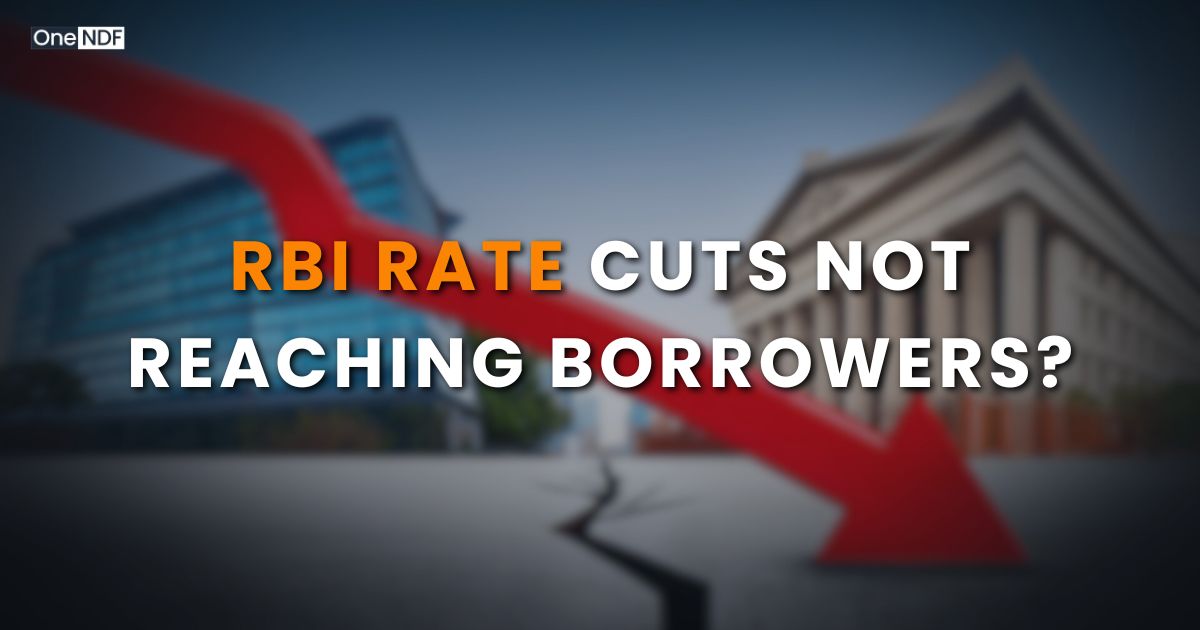
Despite multiple efforts by the Reserve Bank of India (RBI) to bring down interest rates through repo rate cuts, the benefits are not yet visible to many borrowers, especially in the MSME and retail segments. This insight, reported by The Economic Times, reflects a growing concern among borrowers: why are EMIs still high when the RBI has already reduced rates?
At OneNDF, where we work with 120+ lenders and thousands of borrowers across India, we hear this question a lot. Let’s break it down.
What the RBI Did — And What Banks Haven’t
As part of the ongoing efforts to stoke growth, the RBI has been slashing the policy rate, with the repo rate being most significant. This rate sets, inter alia, the price at which banks borrow credit from the RBI. As a rule of the thumb, reduction in a policy lending rate should lead to reduction in lending rates at banks.
Here lies the problem: the charging rate MCLR (the marginal cost of funds-based lending rate) which most freestanding non-bank operators base the servicing of their loan on has barely budged. basing their calculations on the MCLR will move only slightly forward (squeeze) or budging.
An additional insight confirms our assumption. The Reserve Bank of India has become steadily more prudent, reducing risks to its balance sheet after the initial Covid debt and keeping debt with the emerging markets, increasing policy austerity. Thus, further cutting spending may worsen growth output gaps with the macro prudential lending stance employed.
Reserve Bank of India shows that the average MCLR Benchmark BPLR (mostly set by the banking association) stays flat and offers growth capped midways for serving wide bankers at all.
- RBI’s data shows that the average MCLR across banks remains unchanged since February 2024.
- Public sector banks have yet again kept their lending rates above those of private sector banks.
- Even if the RBI’s weighted average lending rate on new rupee loans fell (from 8.72% to 8.70%), borrowers are still not experiencing significant reductions to their EMIs.
Why Are Banks Not Passing on the Benefits?
The delays in transmission of rate cuts can be attributed to the following reasons:
- The lending rate reductions are not possible because banks continue to have high cost legacy deposits.
- A number of banks are sluggish to change MCLR and EBLR-linked loans, particularly for older loan portfolios.
- Due to the unpredictable nature of the market along with increasing NPAs, there is a heightened level of caution among lenders.
What This Means for MSMEs
For business owners and exporters, this lag in rate transmission means:
- Loan costs remain higher than expected.
- Even eligible borrowers miss out on cheaper credit opportunities.
- Manual matchmaking with banks leads to inconsistent loan offers and confusion over eligibility.
OneNDF’s Role: Finding the Best Rate, Despite Market Gaps
OneNDF works to solve precisely this issue through our platform.
This is how we assist:
- We benchmark loan offers across 120+ lenders, so you get access to the actual lowest rate available—not just what your bank offers.
- We track interest rate changes in real-time and recommend refinancing when better options open up.
- Our system bypasses guesswork with data-led eligibility and pre-approved options.
Conclusion
The data is clear: just because RBI cuts rates doesn’t mean your bank will. If you’re still paying an old rate, it’s time to explore alternatives.
Providing direct comparison across assets, helping clients gain explanatory commensurate remuneration is the backbone of OneNDF.
* Are you still using a loan that you are now paying more than necessary for? Let us assist you in getting the right answers.
* For thorough ideas, hit this link or send us a message on this number 7290041855.