
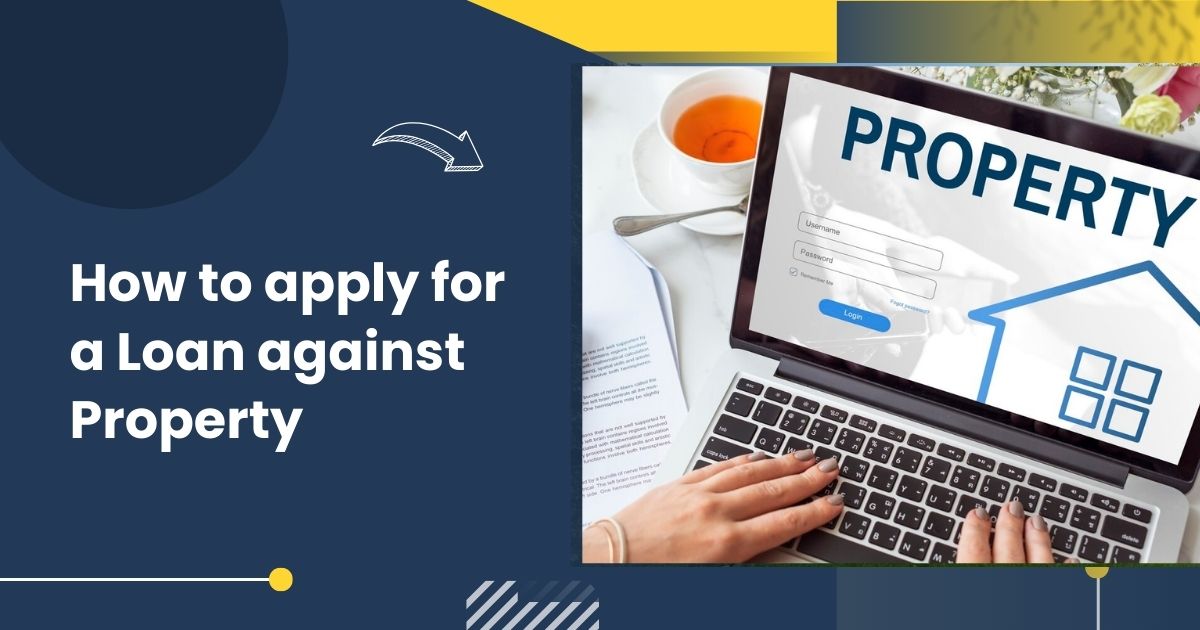
A Loan against property is an effective and quick way for those who need huge funds to fulfill their needs. LAP serves as a valuable financial solution for individuals seeking immediate funds for diverse purposes, including business expansion, debt consolidation, or meeting personal financial requirements
A loan against property is a secured loan and hence requires the borrowers to pledge an asset in order to avail a loan.
What is a loan against property?

A Loan Against Property (LAP) is a mortgage loan extended to individuals, companies, or other entities, leveraging their industrial property, residential property, or commercial property as collateral. The collateral provides security to the lender, thus decreasing the risk for them.
One notable benefit of opting for a loan against property is the ability to retain ownership of your property while accessing the necessary funds to fulfil your business needs.
Benefits & Features- Loan against Property

A Loan against property (LAP) can be acquired for up to 75% of the property value depending upon the market value of the property and the Loan-to-Value (LTV) ratio as per the property type. It may have a longer processing time in comparison to other loans as it is collateral-based and often requires asset valuation, legal verification, and documentation which takes a few weeks.
Benefits of Loans against property include:
Low-interest rates
LAP typically offers lower interest rates as compared to unsecured loans like personal loans. Since the loan is secured by a valuable asset, lenders are more willing to offer attractive interest rates.
Higher loan amount
One of the most significant advantages of a loan against property is the ability to obtain a substantial loan amount. Depending on the property value and lender policy, borrowers can access larger sums of money making it significant for expenses such as medical expenses, repayment of existing loan amount, business expansion, personal needs, etc.
Tax benefits
Another notable advantage of availing a Loan Against Property is its tax benefits. The loan applicant can claim tax benefits under sections 24(B) and 37(1) of the Income Tax Act.
Repay over a longer tenure
The repayment tenure for a Loan Against Property can go up to 20 years. This can help the borrower manage and repay a large loan amount over a lengthy time span enabling them to opt for suitable EMIs.
How to Apply for a Loan Against Property
The process for applying for a loan against property is given below:
1. Conduct a thorough research
Many lenders offer loan against property as their product offerings. This makes it necessary to choose the right one from the multiple options available.
For this, compare the interest rates offered by different lenders and other relevant charges like processing fees, foreclosure charges, EMI bounce charges, etc.
Make sure to choose the lender that perfectly fits your requirements.
2. Check the eligibility criteria required for Loan Against Property
One can qualify for a LAP, by fulfilling simple eligibility criteria. These criteria differ from lender to lender, however, the general eligibility criteria is given below:
Age Criteria
The age of the borrower plays a significant role during the business loan application process. The minimum age limit of the loan applicant is 22 years and the maximum age limit is 70 years.
Employment Type
The business loan is provided to Self-employed professionals, self-employed non-professionals, and Salaried individuals given that they have stability in their job.
Property Type
The value of the property pledged must cover the cost of the loan amount provided by your lender. Industrial, residential or commercial property can serve as collateral for a Loan against property.
Credit score
A higher credit score typically signifies a good credit history and increases your chances of business loan approval. A credit score above 650-700 is preferred by lenders while sanctioning a loan against property.
Work Experience (For salaried individuals)
Salaried borrowers with a minimum work experience of 1 year are eligible to avail loan against property.
Minimum salary requirement (For Salaried individuals)
In order to qualify for a Loan against property the loan applicant must have a minimum salary of INR 12,000 per month and an Annual Income of a minimum of INR 1.5 lakhs.
3. Prepare the Documents required for loan against property beforehand
The documents requested by the lenders confirm your identity, financial status, loan purpose, details about the property served as collateral, and other relevant information.
Due to the collateral involved in the LAP, there will be more extensive paperwork requirements compared to unsecured loans.
The documents required may vary from lender to lender. However, a list of documents required for both salaried employees and self-employed individual have been provided below:
Documents Required for Self-Employed Individuals/Businesses
The following documents need to be provided by a self-employed individual to avail a Loan against property
Identity Proof
- PAN Card
- Driving License
- Passport
- Voter ID
- Aadhaar Card
Address proof
- Driving License
- Passport
- Voter ID
- Aadhaar Card
- Utility bills
Ownership proof
- Sales Agreement Copy
- Electricity Bill
- Share Certificate (in case of co-operative housing societies)
- Municipal Tax Bill (wherever applicable)
Firm Constitution
- MoA/AoA (In the case of Pvt Ltd.)
- Partnership Deed (In case of partnership firm)
- GST Registration Certificate
- Form 32 for information about the latest directors
- Udyam certificate
Income proof
- Audited financials (Last 3 years)
- Tax Audit Report (Last 2-3 years)
- GST form 3B (last year)
- ITR, Computation of Income, profit & loss account statement, and Balance sheet (Last 2 years)
Banking
- Bank statements of your business accounts (Last year)
Signature proof
- Passport
- Banker’s verification
- PAN card
Other documents
Shareholding pattern and the list of directors
Sanction letters of existing loans (if any) along with corresponding EMI details
Documents for Salaried Individual
The following documents need to be provided by a self-employed individual to avail a Loan against property
Identity Proof
- PAN Card
- Driving License
- Passport
- Voter ID
- Aadhaar Card
- Employee ID
Address proof
- Driving License
- Passport
- Voter ID
- Aadhaar Card
- Utility bills
Ownership proof
- Agreement Copy
- Electricity Bill
- Share Certificate (in the case of co-operative housing society)
- Municipal Tax Bill
Income proof
- Salary slips (Latest 6 months)
- Form-16 (Last 3 years) or employment proof
Banking
- Bank statements reflecting the salary credits (Last 6 months)
Signature proof
- Passport
- Banker’s verification
- PAN card
Fill out the loan application form
- Start the application process by filling out the loan application form.
- You can visit the lender personally or go to their official website to start the application process.
- Fill in your personal details and the details of your property that you are providing as collateral.
- After filling in the application form, you will receive a confirmation call from a representative to cross-check your personal and property details.
- Then you need to submit your required documents such as income proof, bank account statement, property documents, address proof, etc. for the lender to verify your information, records, and eligibility for the loan.
- Once the documents have been submitted, all the banking details, personal details, and income details will be verified by the lender. Your credit score will also be examined during the process.
- The lender will also verify the property papers on legal grounds.
- After successful verification of the details, if the lender considers you creditworthy and your documents authentic then you will be provided with a sanction letter containing the loan offer.
- Once the entire process of examination and the loan offer accepted, the loan amount will be disbursed in 2-3 working days in your account.
Loan against property interest rates and other charges

The interest rate, processing fee, and other charges may vary from lender to lender but the charges are as such:
- Interest Rate – 8.50% to 18% p.a.
- Processing fee- 1% to 3% of loan amount + Tax
- Foreclosure charges – up to 2.5% of the outstanding loan amount + GST.
- Pre-payment charges – up to 4% of the outstanding loan amount.
Frequently Asked Questions
Is having a co-applicant mandatory while obtaining a loan against property?
A co-applicant is essential while obtaining a loan against property only if the property served as collateral is owned by more than one person.
What is the maximum amount that can be availed in a Loan against property?
The maximum amount that can be availed in a Loan against property depends on the market value of the property and the LTV ratio.
Which property can be served as collateral while availing LAP?
The property that can be served as collateral while availing loan against property (LAP) comprises industrial, residential, or commercial property.
Do banks provide commercial property loan?
Yes, the bank provides commercial property loan. One can obtain this by mortgaging a commercial property.
Can a loan against property be acquired to arrange funds for business purposes?
Yes, a loan against property be acquired to arrange funds for business purposes.