

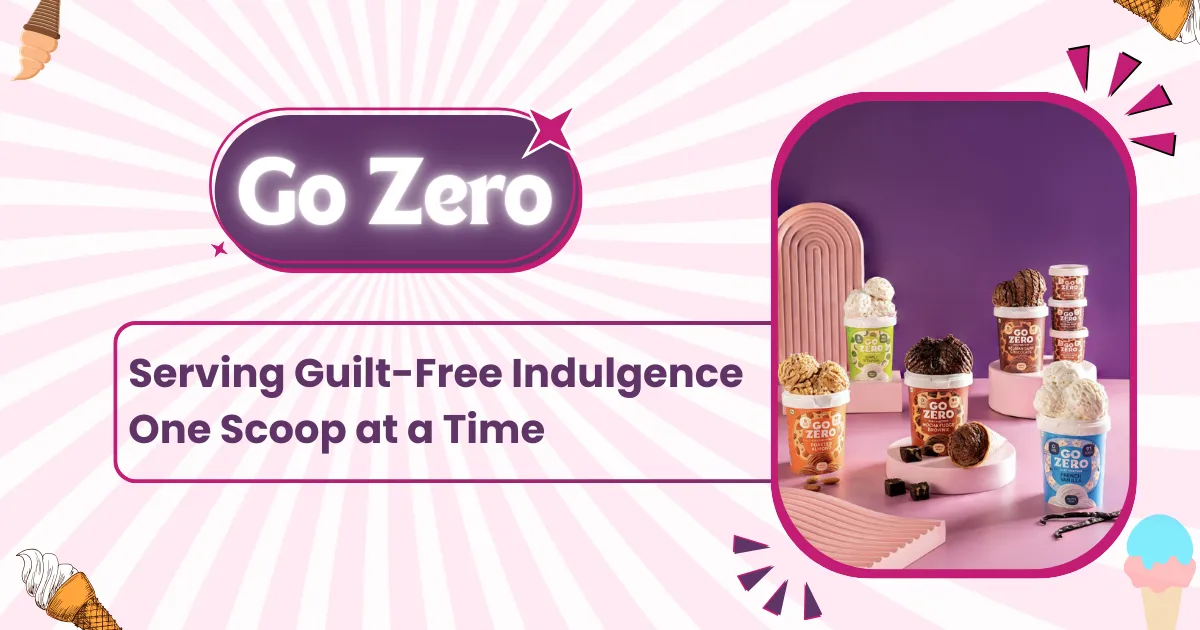
When Kiran Shah, the founder of Go Zero, stepped onto the Shark Tank India stage, he possessed much more than a business idea. He carried the weight and wisdom of a family legacy. Kiran Shah, as the son of the founder of Apsara Ice Creams, had ice cream in his blood. Shah did not opt for the easier route of growing a family business. Instead, he decided to pioneer, reinvent, and build a brand that looks to the future.
His pitch for Go Zero, the first ever zero sugar, guilt free ice cream brand in India, has now become iconic. It earned him one of the largest investments of the season. This is the story of transforming a dessert into a thriving business.
The Founder’s Journey: A Legacy Reimagined
Kiran Shah’s childhood was entwined with Apsara. He was one of the key people in the family business and helped Apsara Ice Creams grow from one outlet to more than a hundred outlets spread over India. This experience gave him a hands-on education in manufacturing and supply chain logistics, and more interest in the Indian consumer’s refined palate.
He noticed a permanent change in the market while the pandemic was occurring. With the growth of lifestyle diseases in India, sugar intake was under a consumer’s microscope. People were looking for better alternatives but without compromising on the taste. This gave rise to the question of whether ice-cream could be tasty, creamy and indulgent, but without the health guilt.
He started building his answer to the question, and for that, he left the comfort of his established family business. Thus started his new venture – Go Zero, a brand built on the foundational pillar of zero added sugar promise. After extensive research and development, he was able to create the sugar-free ice cream of his dreams. Through a unique combination of natural sweeteners, he could offer the taste and texture of premium ice-cream for half the calories and no sugar.
Also Read: Culture Circle – How Two Friends Built India’s Go-To Luxury Fashion Marketplace
The Shark Tank Pitch: A Masterclass in Preparation
Shah walked into the tank asking for a crore for a percent of his company, which on his end he calculated to be worth 100 crores. As outlandish as this valuation sounds, it was backed by immense growth, numbers, and a no-holds-barred pitch that left the judges speechless and enraptured.
Go Zero’s ways to shine are:
- Explosive Growth: After FY 22-23 gunning for a 2.5 crore revenue, Go Zero FY 23-24 achieved 11.1 Crores. Go Zero hit 15 Crore sales in the first six months of FY 24-25.
- Quick-Commerce Dominance: Shah had masterfully cracked the code of modern retail. Go Zero’s sales partially came from quick-commerce platforms like Blinkit, Zepto and Swiggy Instamart. Go Zero’s sales were 70-80% on these platforms which provided a scalable efficient business model.
- Undisputed Market Leadership: This was his checkmate move. Go Zero held a 70% market share in the quick-commence platforms for zero sugar ice cream, proving himself not just a player, but a dominating leader in his refined niche.
- Lean and Mean Operations: The company was remarkably lean, running a projected 100 Crore annual revenue run with a team of just 35 people the company was efficient.
While thin net margins due to high marketing spend and complex cold chain logistics were challenges, the strategic vision backbone of the business commanded profound respect from the sharks.
The Deal: A Perfect Match for D2C Growth
The sharks were literally astounded by Shah’s mastery over his business. His extensive knowledge of the industry along with the present vision for the future made Go Zero one of the most appealing investments.
After a competitive round of negotiations with multiple sharks showing interest, Kiran Shah secured a deal with Aman Gupta, Co-founder of boAt.
The final deal was ₹1 Crore for 1.5% equity, resulting in a valuation of ₹66.67 Crore. This strategic partnership was a D2C marketers dream. Go Zero’s growth plans were perfectly complemented by Gupta’s unmatched prowess in developing D2C brands and establishing a connection with the youthful health-oriented demographic.
Also Read: BL Fabric: Bootstrapped Lehenga Brand to Shark Tank Success
Key Lessons for Founders
Every entrepreneur can benefit from the Go Zero story.
- Leverage Experience to Innovate, Not Imitate: Shah did not go the imitation route with his family’s legacy. Instead, he chose to carve out a gap the tradition could not serve and developed a brand that perfectly catered to that need.
- Data-Backed Confidence is Unbeatable: His high valuation was a number-driven hypothesis. Understanding critical metrics like market share and customer acquisition costs empowers one’s ability to pitch with undeniable authority.
- Conquer a Niche First, Scale After: Rather than going toe-to-toe with Amul, Go Zero focused on winning the fast-growing zero-sugar market segment and quick commerce channel. This approach provided a strong competitive advantage.
- The Right Investors Teach More Than the Money: Accepting a lower valuation to bring on three strategic investors demonstrates how Shah was willing to compromise in the hopes of benefiting from the long game. The proper mentorship and connections can be much more impactful than capital, giving Go Zero the fuel it needed.
This can serve as a powerful reminder for all of us: the right mix of legacy and innovation can redefine entire markets. Turn a simple idea into a category-defining brand with the right goes.
Disclaimer: The information in this article is intended for general informational purposes only and does not constitute financial, legal, or professional advice. Results discussed (e.g., revenue figures, valuation details) are based on publicly available data and case study insights; actual outcomes may vary. Readers should conduct their own due diligence before making business or investment decisions.