
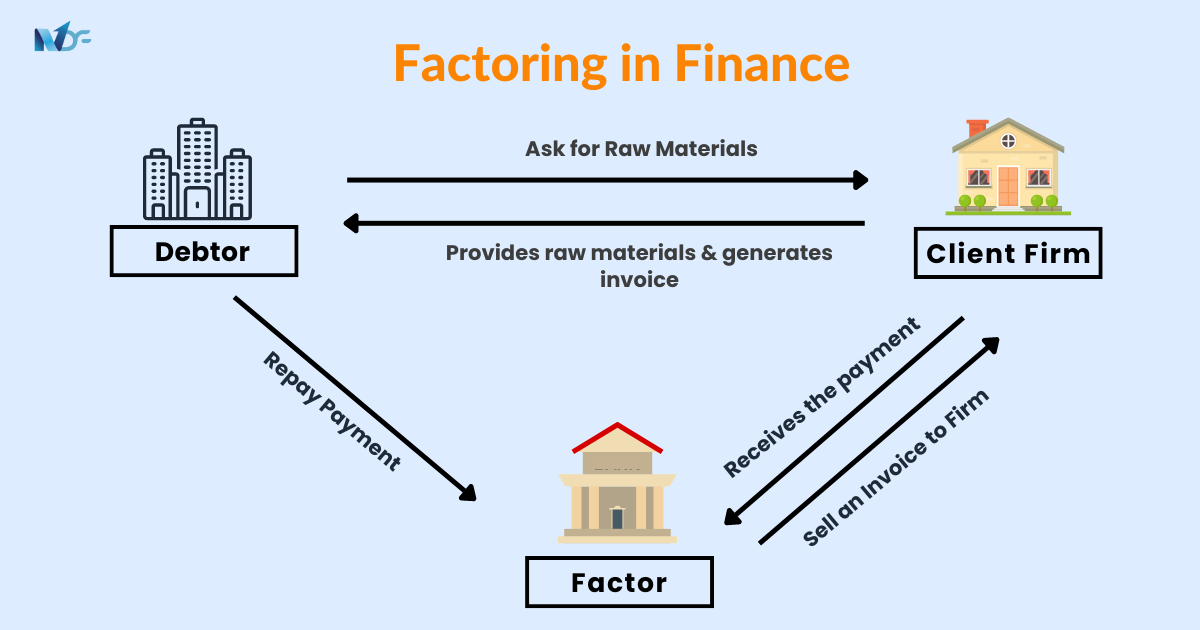
In finance, factoring is a popular method for businesses to sell their accounts receivable (invoices) to a third party to meet short-term capital needs. Under the transaction between the two parties, the factor pays the amount due on the invoices minus its commission/fees. Through this method, businesses convert unpaid invoices into immediate cash – with no risks involved. This method helps companies get access to funds to cover cash flow shortfalls in the short term or fulfill capital requirements for growth, diversification, meeting supply demands, etc.
Recently, factoring has become a more prominent financing option for several businesses looking to fix gaps in their working capital. The RBI’s regulated Trade Receivables Discounting System (TReDS), the invoice-discounting system for MSMEs in India, witnessed over a three-fold jump to Rs. 34,362 crore in FY22 from Rs. 11,165 crore in FY20.
Understanding Factoring with an Example
Let us assume that you own a business and have accounts receivable pending, which will be due after five months. However, in the meantime, you need access to cash to meet your immediate fund requirements.
To get access to funds, you approach a factor or a financial institution that agrees to buy your invoice worth Rs 20,00,000 from an entity named XYZ Ltd. The factor may discount the invoice at 5% and keep Rs 1,00,000 as commission. The balance amount is Rs 19,00,000.
Now, the factor might not advance the complete amount of Rs 19,00,000. It would only give around 75% of that, which is Rs 14,25,000 in the first tranche, and the remaining amount of Rs 4,75,000 when the financial institution receives the balance payment from the customer.
Three Parties Involved in Factoring
There are mainly three parties involved in factoring:
- Business/Client Firm
- Factor
- Debtor
An invoice serves as documentation of the debtor’s outstanding balance with the company or client firm. The debtor is expected to repay the business within a stipulated time period. Companies with immediate cash needs can sell this invoice to a factor at a profit.
Rather than waiting six months for the original invoice to mature, the factor buys the invoice from the company in exchange for cash that can be utilized immediately by the business. The vendor/debtor will repay the original amount to the factor when the invoice matures in six months.
Also Read: What is Invoice Discounting
Types of Factoring in Finance
Depending on a business’s specific needs, there are different types of factoring:
- Recourse Factoring: Sellers remain liable to factors on the debt till the time buyers clear all outstanding dues. Factors are not vulnerable to bad debt-related risks.
- Non-recourse Factoring: The factoring company assumes most of the risk of non-payment by customers.
- Advance Factoring: The factor pays the seller in line with the pre-agreed interest rate against the yet-to-be-collected receivables.
- Disclosed Factoring: The buyers have complete knowledge and understanding of the factoring arrangement.
- Undisclosed Factoring: Buyers lack understanding of the factoring arrangement.
- Maturity Factoring: The factor pays the seller either on the due date or post the invoice maturity date.
- Invoice Factoring: The standard process of factoring where a business sells its accounts receivables to factors to get immediate access to funds. This type of factoring is costlier compared to other types of financing; however, it’s a great option for many businesses operating in specific sectors or with particular credit profiles.
- Domestic Factoring: When both the buyer and the sellers are in the same country. Country-specific laws may be applicable because of the domestic character of the transaction.
- Export Factoring: The process where a lender/factor purchases a company’s receivables at a discount. This transaction may include a third factor in the importing country, requiring global expertise in different industries, a good understanding of global trade processes, and the ability to make disbursements in different currencies.
- Reverse Factoring: A financing arrangement in which the buyer begins to offer early payment to sellers or suppliers.
How Factoring Works in Finance
In factoring, a company receives funds from a factor against its accounts receivables at a lower price. For its services, the factor charges a commission. Mostly small and medium-sized organizations transfer the ownership of accounts receivable to the factor to obtain funding for their working capital needs.
Also Read: Bill Discounting Vs Bill Purchase
Advantages of Factoring
The advantages of factoring include:
- Fulfills Immediate Financial Requirements: Unlike traditional business loans and bill discounting facilities, factoring eliminates the need for extensive paperwork and a longer wait period before accessing funds.
- Flexibility: Exporting companies can decide when to factor their invoices and need not factor all the invoices from a specific buyer.
- Credit Limits: Factoring is not considered a loan, so companies can avail of this facility in excess of their credit limits.
- Eliminates Risks: Factoring shifts the risks of default and bad debts from businesses to the factor.
- No Credit Checks: Unlike bank loans, availing funds through factoring does not require high creditworthiness or extensive background checks. Check your credit score in free.
- Improves Cash Flow: Factoring ensures smooth cash inflow, especially for industries where receivables take a long time to convert to cash.