What is an EMI?
An Equated Monthly Instalment (EMI) is a fixed sum of money that is repaid by the borrower with regularly scheduled payments or installments. Each EMI includes the repayment of a portion of the principal amount borrowed and the payment of interest on the debt.
The main variables that determine the size of the EMI include the amount of the loan, the interest rate charged by the lender, and the length or term of the loan. The EMI stays the same throughout the loan term, making it easy for the borrower to budget in advance for the required payments.
Typically, EMIs are paid for auto loans, mortgage loans, personal loans, and student loans. Other than mortgages, which are sometimes variable-rate loans, where the interest rate can change during the term of the loan, nearly all EMIs are fixed-rate loans, meaning that the interest rate charged over the term of the loan is fixed at the time of borrowing.
Types of EMIs
Notably, EMI in arrears and EMI in advance are two types that can be chosen while opting for a loan.
EMI in arrears
EMI in arrears is the standard EMI plan wherein one has to pay a fixed amount on a specified day each month. In this, the lender disburses the complete loan amount in the bank account of the borrower after deducting the processing fee. This method is best for vehicle and home loans and for borrowers who do not have enough funds to make the down payment.
EMI in advance
An advance EMI is a payment made towards a loan before the scheduled due date. This payment can be made in full or in part, depending on the borrower’s financial situation. The advance EMI payment reduces the outstanding principal amount, which in turn lowers the total interest paid over the life of the loan.
EMIs for Secured, Unsecured loans
EMIs may be paid for either secured (collateralised) or unsecured (non-collateralised) loans. Mortgage loans are secured with the home that the loan is being used to purchase, and the collateral for an auto loan is the vehicle being purchased with the loan.
Personal loans are extended without collateral being required. These unsecured loans are made based on the borrower’s creditworthiness, usually demonstrated through a credit score, and their ability to repay as indicated by their income and assets.
The interest rate charged on an unsecured loan is usually higher than the rate on a comparable secured loan, reflecting the higher risk of non-repayment that the creditor accepts.
Also Read about Secured Loan
What factors determine the interest rate for an EMI?
Factors such as inflation, fiscal deficit, loan tenure, and borrower’s CIBIL score help in determining the interest rate for an EMI.
How EMIs Affect Your Credit Score
Paying your EMIs on time is an excellent way to build your credit score. Payment history is the single most important factor that contributes to your credit score, and a long track record of on-time payments is good for your credit rating.
On the other hand, your credit score can take a hit if you don’t make timely payments or you default on the loan—which is a major red flag in the eyes of lenders.
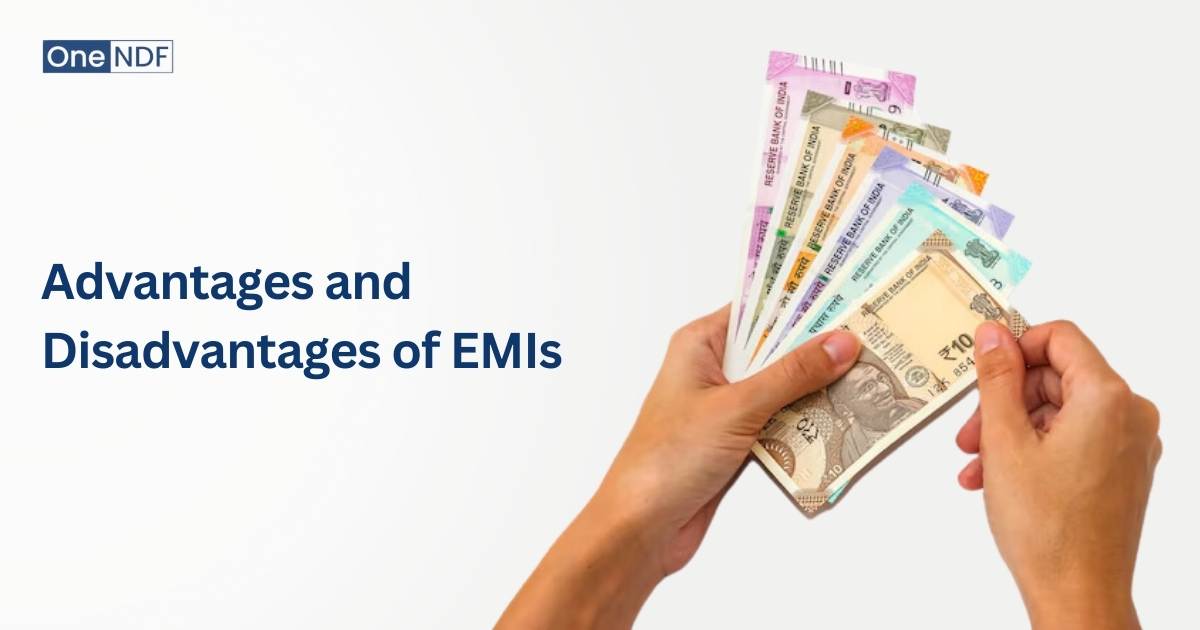
Advantages of EMIs
- Freedom to Purchase: EMIs allow borrowers to buy anything and everything, which they wouldn’t be able to buy otherwise. Be it expensive household items, a vehicle, jewellery or a house. As borrowers get a chance to divide the amount in monthly installments and pay it off easily, they make the purchase and enjoy the benefits. This gives an advantage to not only buyers but also to the traders and sellers.
- Budget-friendly: EMIs allow you to spread the cost of a purchase over a series of monthly payments, making it easier to afford expensive items.
- Flexibility: Many banks and financial institutions offer flexible EMI schemes, allowing you to choose the amount per EMI or the payment duration.
- Builds trust with lenders: Paying your EMIs on time shows lenders that you are a reliable borrower, which can be beneficial if you need financial assistance in the future.
- Financial empowerment: EMIs can make expensive purchases more manageable by distributing the cost over time.
- Credit score boost: EMIs can potentially boost your credit score for future financial opportunities.
- Immediate ownership: You gain immediate ownership of the item you purchase with an EMI.
Disadvantages of EMIs
- Interest charges: EMIs can result in higher repayments than the upfront cost of the item. This is because of the interest charged by the institution. Interest charges can be especially high if the loan is taken out for a long period or if the issuing bank has high interest rates.
- Longer debts: EMIs are designed to extend the loan period, so the debt is carried for longer. For example, home loans or personal loans can have tenures of 20 to 30 years.
- Credit score impact: Missing EMI payments can negatively impact your credit score. This can make it harder to get favorable loan terms in the future.
- Additional charges: EMI schemes can have hidden costs like interest costs, processing fees, and convenience fees.
- Prepayment penalty: Most EMI schemes charge a prepayment penalty if you pay off the loan before the tenure ends. The penalty can range from 2–3% of the principal amount.
- Lender can take over asset: If you regularly default on payments for a home loan or car loan, the lender can legally take over the mortgaged asset.
Check Your EMI by different Calculators:
- Business Loan EMI Calculator
- Loan Against Property EMI Calculator
- Home Loan EMI Calculator
- Working Capital EMI Calculator
Conclusion
While an EMI option allows you to make big purchases right off the shelf, even though you might not have the funds to pay for it, it is important to determine if the loan is for an urgent need that savings cannot cover. Also one must assess the stability of fixed interest rates and predictable monthly payments and compare the cost of borrowing with other financing options, such as interest-free credit cards. Finally, to avoid financial strain, ensure your income is stable enough to handle regular payments over several years.