
Research shows CAs’’ biggest concerns about adopting advanced technology are data quality (46%) and security (38%).
Chartered accountants are custodians of vast amounts of sensitive client and engagement information. The loss or compromise of such information can lead to severe repercussions, affecting not only the clients but also the CAs. Many CA firms are currently exploring the potential of utilising this data through Generative AI, which raises concerns about the risk of confidential information being disclosed to unauthorised users—commonly referred to as the “oversharing” issue.
In recent years, the most prevalent form of natural language processing was ChatGPT, which utilized publicly accessible data to generate responses to user inquiries. However, with the latest developments in Generative AI, particularly through platforms like Microsoft Copilot, this capability is now being extended to a firm’s proprietary data.
Thus the apprehensions that CAs have regarding oversharing are indeed justified.
Research shows CAs’’ biggest concerns about adopting advanced technology are data quality (46%) and security (38%).
Many standard data governance and security software solutions fail to meet the specific requirements of CA firms regarding the protection of data access related to their distinct client and engagement data frameworks. However, there are ways to innovate effectively. This involves understanding the specific AI tools that can be utilised securely, identifying applications that provide value, and managing risks that are particular to the accounting sector and its clientele.
Also Read: ICAI hosts event on ‘Mastering Your Future: CA career counselling’ in Doha
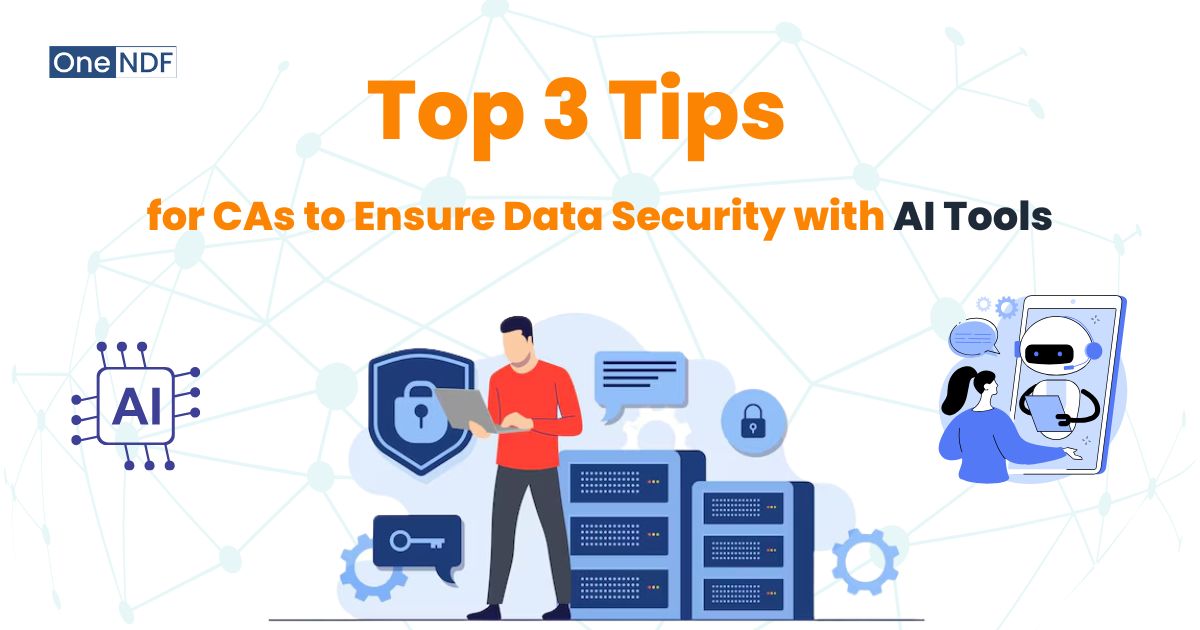
There are three essential steps that CA firms can implement to safeguard data while allowing CA professionals to fully utilise the potential of cutting-edge AI technologies. These measures assist CA firms in establishing their own frameworks for managing client engagement data.
First, ensure that data within your ecosystem is appropriately organized according to the client engagement model. Verify that the permissions for each system are uniform and interconnected with other Microsoft platforms, enabling users to log in once and maintain consistent access throughout the Microsoft environment in accordance with the permissions of each system.
Second, make certain that your organization’s access permissions policies are current and compliant with client agreements and regulatory requirements. Conduct a thorough review of all permissions and policies, comparing them against a comprehensive search of all client contracts. Once these permissions and contracts are harmonized, ensure that they adhere to regulatory standards.
Lastly, confirm that the permissions within your ecosystem are consistent with your organization’s updated data access policies. It is vital that these permissions are linked to both your user systems and your practice management systems, ensuring that they are automatically updated when access rights change due to personnel transitions.
By implementing these measures, accounting firms can harness the full capabilities of Generative AI, enabling CAs to share knowledge effectively while maintaining a strong security framework.
Also Read: ICAI ramps up disciplinary actions against errant CAs